



Always Learning


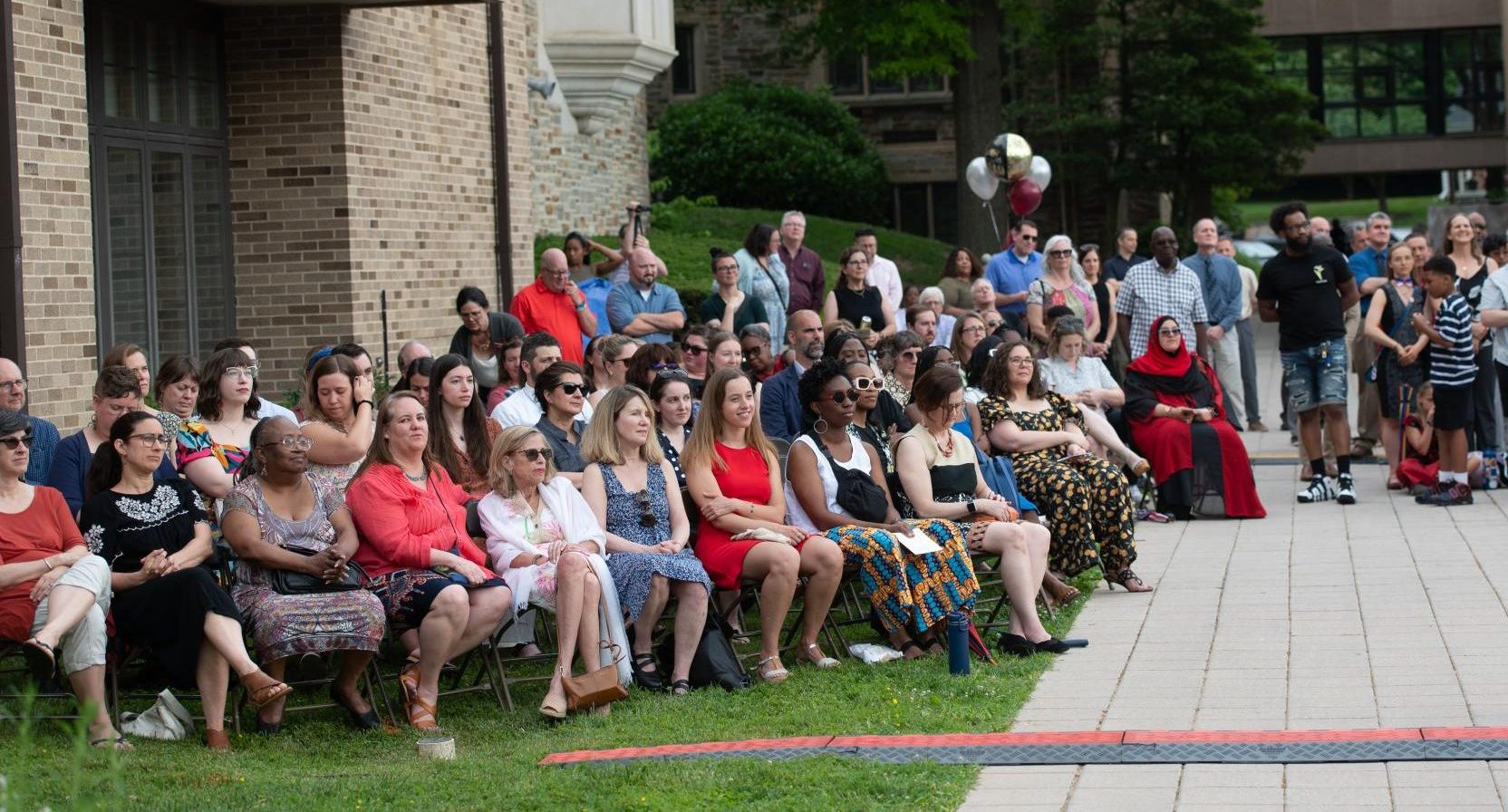
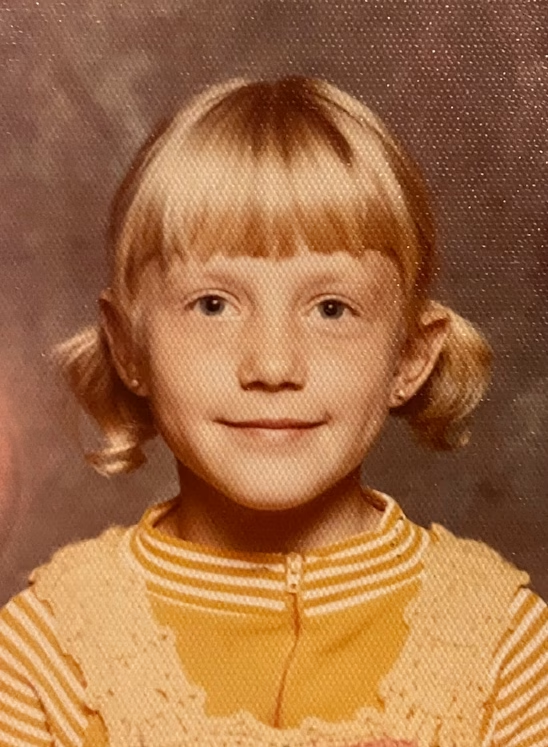
Born in Holyoke, Massachusetts, Koniezhny and her younger brother Todd were close to their grandparents, who had immigrated from Quebec for industrial jobs in the paper industry.
“I grew up hearing my grandparents speak French, and going into the church where Mass was in French once a month,” she remembers, “so it’s not surprising that I chose to speak and to be a French teacher.”
Hard work ran in her family. Koniezhny once spent an entire childhood summer in the library, trying to read a book a day for a reading competition. When she learned another kid was catching up, she doubled her reading load, bringing home the prize for most books read at the end of the summer.
At her 1,000-student high school, Koniezhny excelled academically, becoming class valedictorian. She earned a scholarship to Williams College, where she played rugby.
When she graduated, though, Koniezhny felt lost. She says she had no clue what she wanted to do with her life.
But she did have an uncle she considered a role model. The only one of her mom’s six siblings to go to college, he taught French at the College of William & Mary.
She also had a good friend who was a Latin teacher. When she saw how happy he was with teaching, she began wondering if it could be a career path for her.
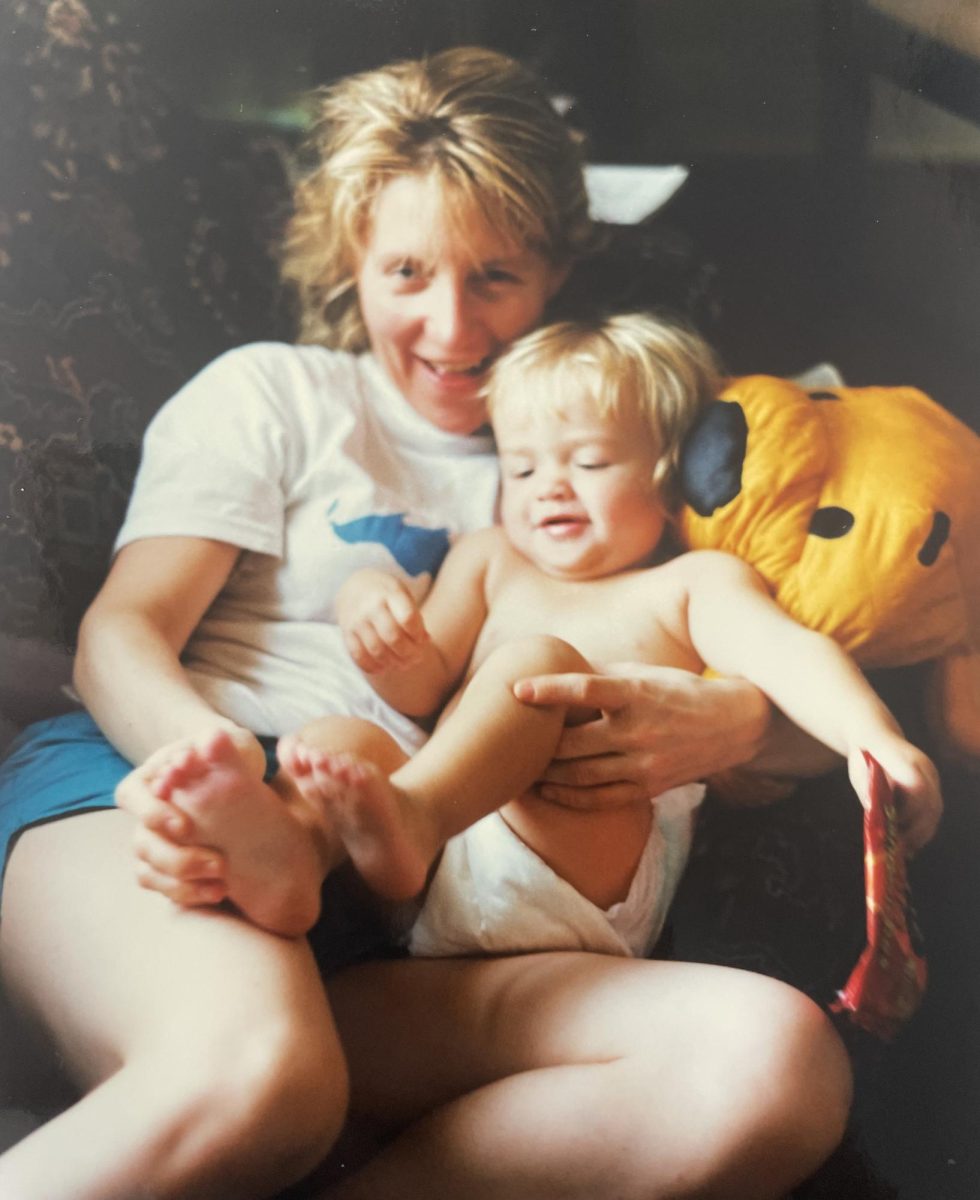
In 1989, Koniezhny began teaching French at Applewild School in Massachusetts, and fell even more deeply in love with the language. She then moved to New Orleans to teach at Isidore Newman School.
One day, a woman from Baltimore came through on a tour while interviewing for a Spanish teaching position. The principal introduced her to Koniezhny.
“I immediately thought she could be my friend,” remembers Lucy Hand ’80, a current Friends Spanish teacher.
Ms. Hand took the job, and the pair became inseparable. Working together at Newman, they shared a four-plex in faculty housing.
“Whenever there was an invasion of any pests—cockroaches, mice—we’d call maintenance to spray—and they’d run right over to her apartment,” says Hand.
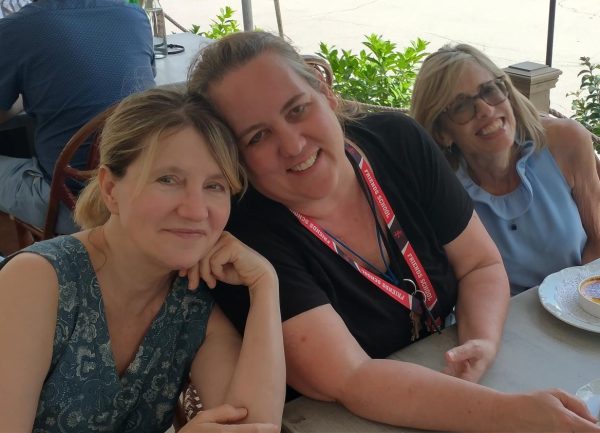
Hand asked Koniezhny to be godmother to her daughter Grace and son Logan. Together, the friends watched Mardi Gras parades, and went on runs around Audubon Park.
“We used to see a lot of live music together. We used to eat out together,” says Hand. “She was a great pal. She is a great pal.”
After five years in New Orleans, Hand’s family returned to Baltimore. There, Hand took a job teaching Spanish at her alma mater, eventually becoming head of the Language Department.
For the next decade, Koniezhny stayed behind. When Hurricane Katrina hit in 2005, she moved temporarily to Houston, where another school offered her a French position until she could return to New Orleans.
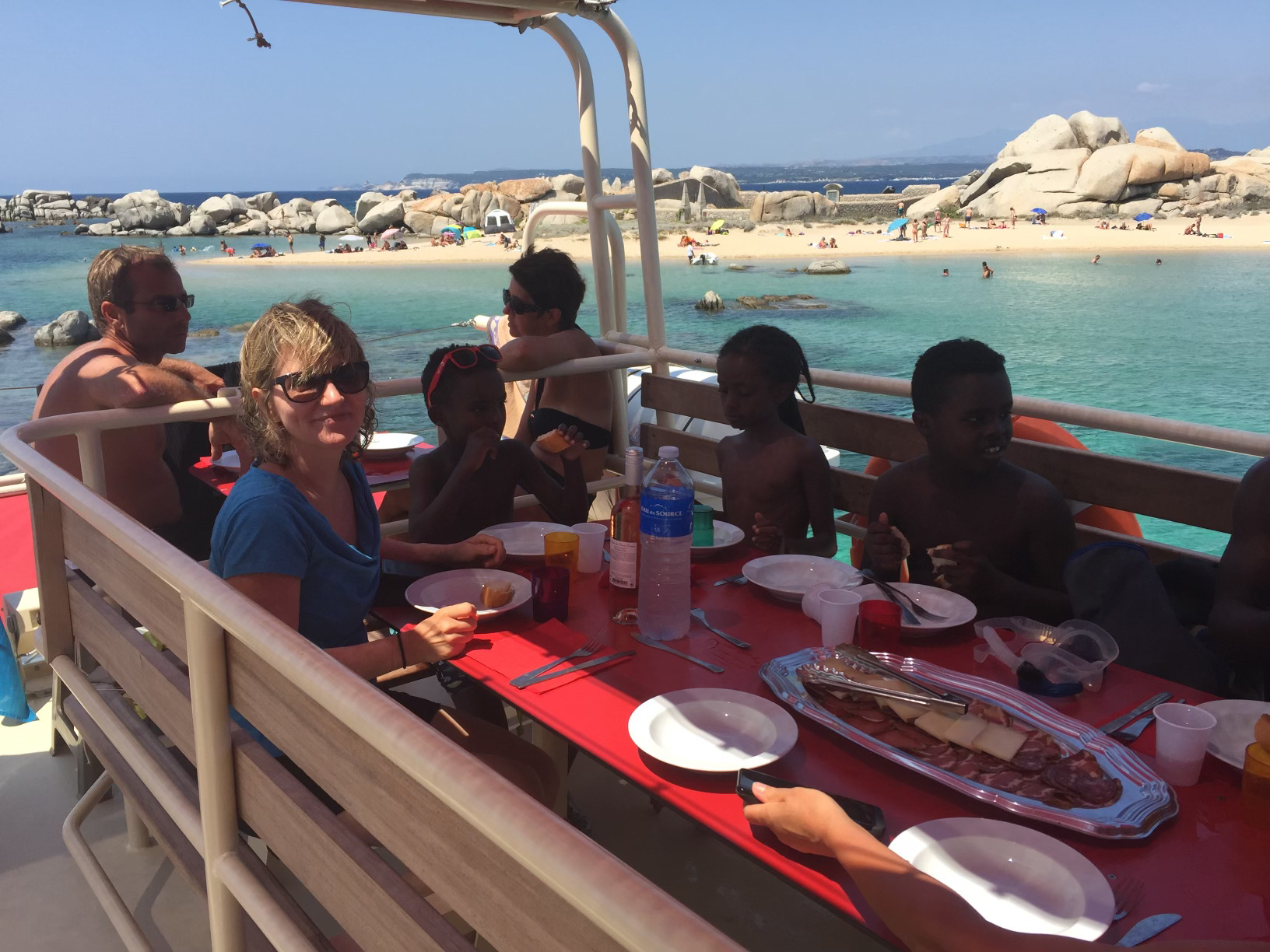
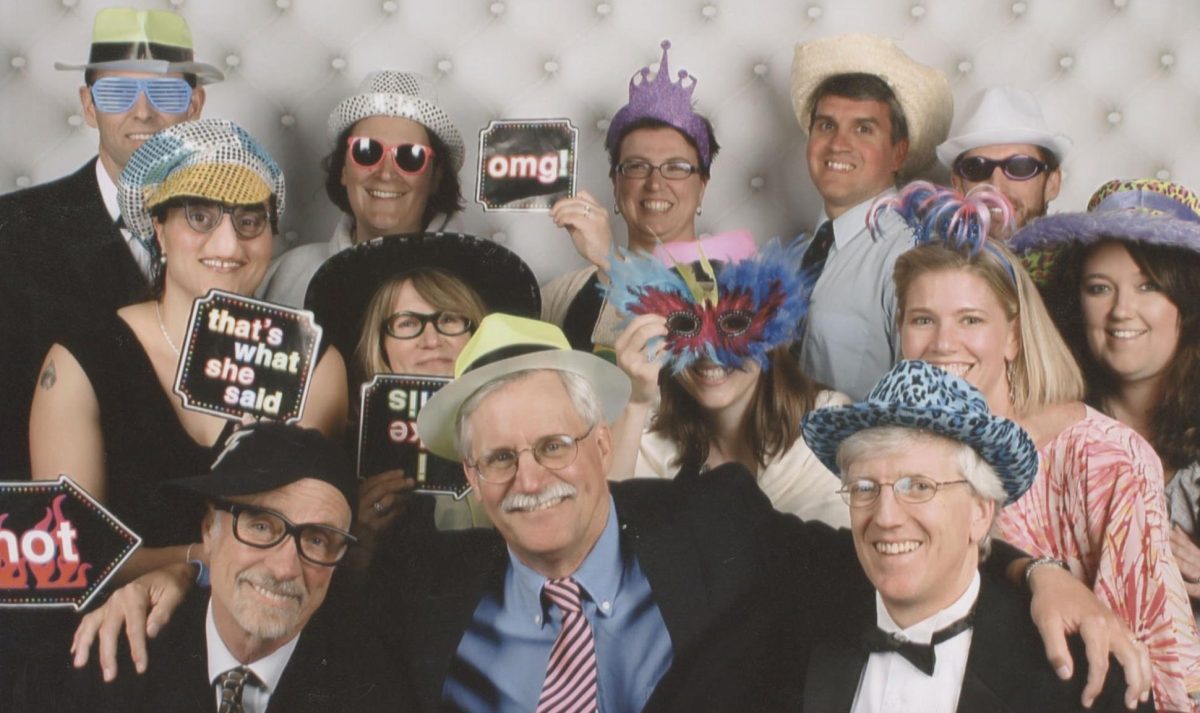
One day in 2008, she got a phone call from Hand.
“When there was an opening for a French teacher, I immediately thought of her,” Hand recalls. “So I was able to woo her to come up north to Friends.”
Fellow French teacher Kristen Andrews remembers the buzz Hand created around Koniezhny before she arrived.
“We were anticipating her coming. But there was a little bit of, you know, ‘Is she really all that? Ms. Hand has been talking her up,’ ” Ms. Andrews remembers. “I have to say, I was a little bit like: ‘Come on, is she gonna walk on water?’ ”
Koniezhny came to Friends for a visit, job interviews, and to teach a demo lesson. Andrews sat in on the lesson, and was surprised by what she saw.
“A lot of people who don’t know Quaker schools, there’s certain aspects that people don’t know,” she says. “[Koniezhny] got it. She got the silence. She got it. She already felt it; you could just tell in her classroom. And I was like: ‘Yeah, she’s the real thing.’”
Koniezhny was hoping to move into an administrative position. At first, she thought moving to the East Coast, with its many independent schools, would help her achieve this goal. Maybe Friends would be just a stepping stone? But she quickly became engrossed in it.
“I was intrigued by the idea of Quaker education,” Koniezhny says. “And I believe that it has shaped me in terms of who I am.”
Colleague and friend Schoen Oakes remembers those early years. When Koniezhny arrived in 2008, Ms. Oakes had only been at Friends for a year herself. The pair started to click the following year, when Koniezhny became Academic Dean and Oakes started a new job as Dean of Student Life.
Koniezhny lived the philosophy that she worked best when she knew the people she was working with personally. So she invited Oakes to lunch at Miss Shirley’s Cafe.
“I had just had a baby. I remember sitting outside, and the 3-week-old baby [Addie Oakes ‘28] was in a Baby Bjorn on my belly,” Oakes remembers. “She was really good. She slept the whole time.”
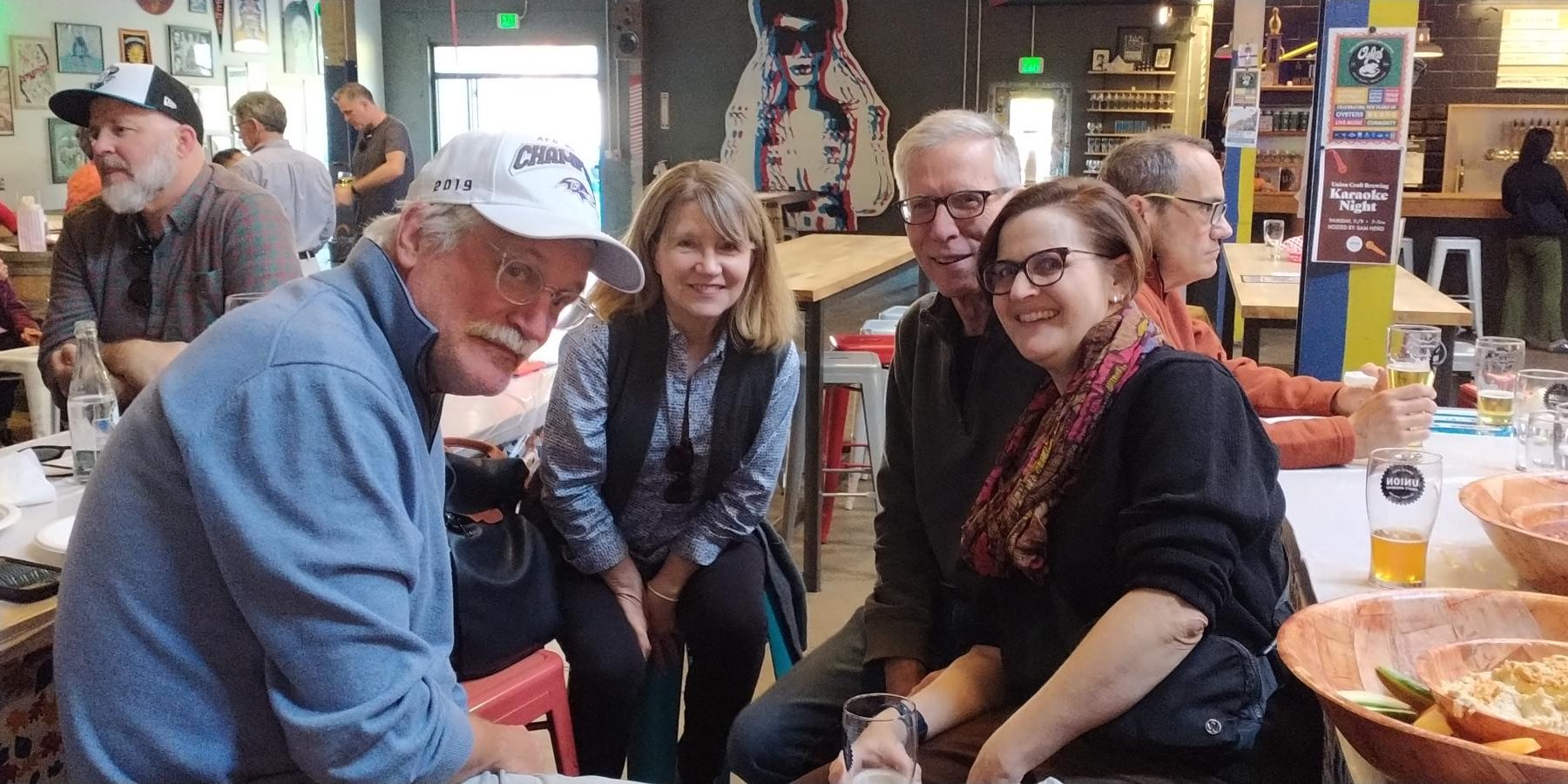
They talked for hours, about themselves, their work, and each other. During that lunch, they began to develop a deep mutual respect, and a friendship both inside and outside of the workplace.
Eighteen years later, Koniezhny has supported three heads of school and five Upper School principals, advocated for and expanded teacher professional development, helped found the Scholars Certificate Program, taught French irregular verbs to a generation, and built almost 7,000 individual class schedules.
And she and Oakes, now the Director of Student Support, have weathered all kinds of challenges.
“You go through a lot of stuff in the Upper School: a lot of crazy situations, a lot of scary situations, a lot of really dangerous, emotional situations,” says Oakes, now the Director of Student Support. “It’s just so nice to have somebody in that inner circle that you can really share everything with.”
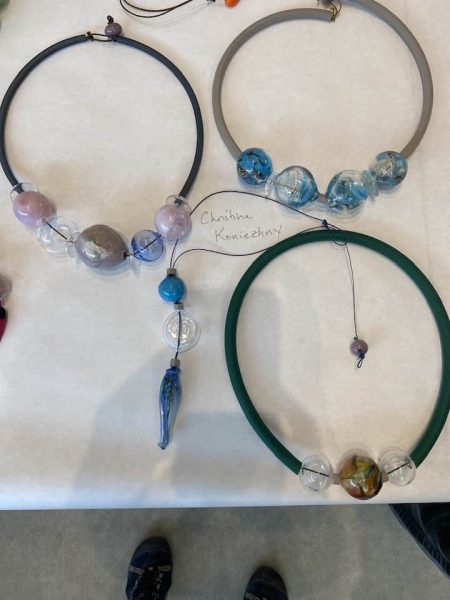
In recent years, a favorite hobby of Koniezhny’s has been tabletop glassblowing. She spent her last sabbatical, in 2022, at Penland School of Craft in North Carolina’s Blue Ridge Mountains. That September, she returned to Friends with necklaces made of gorgeous glass beads she had blown herself. She gave one to Oakes.
Growing up, Oakes had an aunt with Multiple Sclerosis; she and her mom were two of her aunt’s caregivers. So she has more experience than most with the kind of progressive illness that robs someone of their body. And in 2024, Oakes started to worry about her friend.
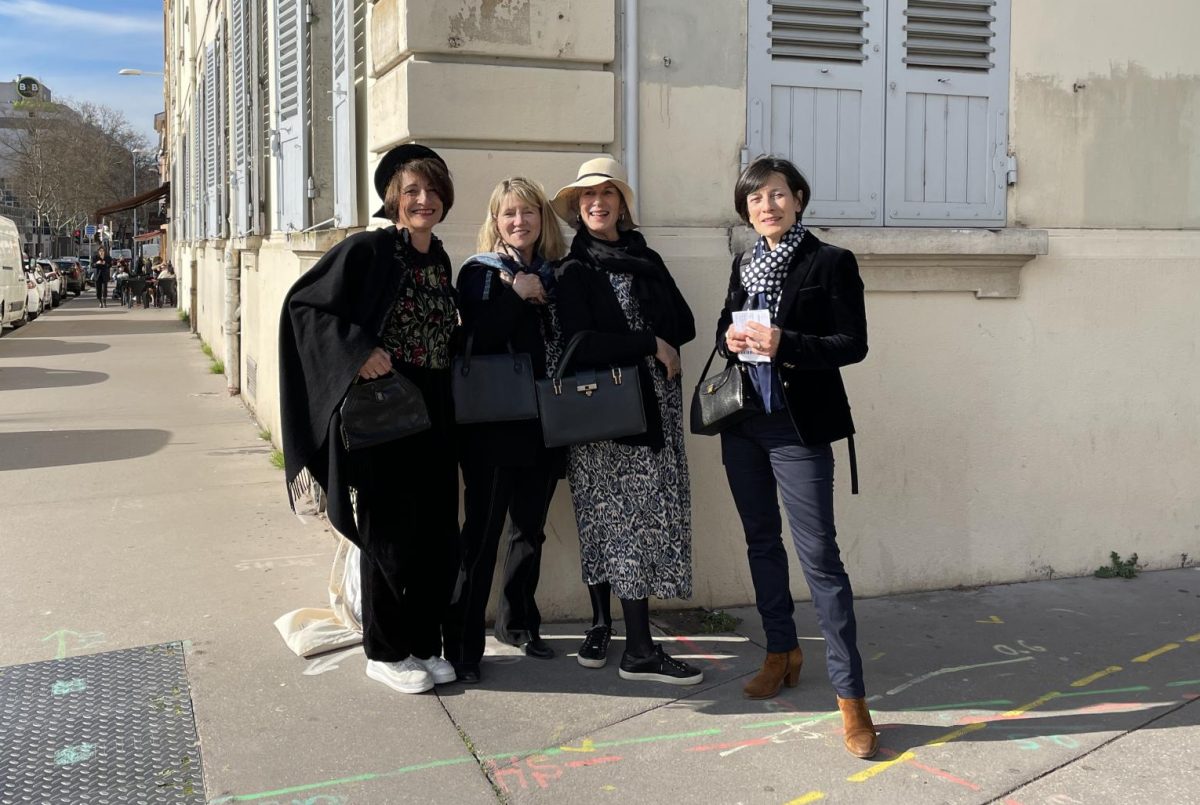
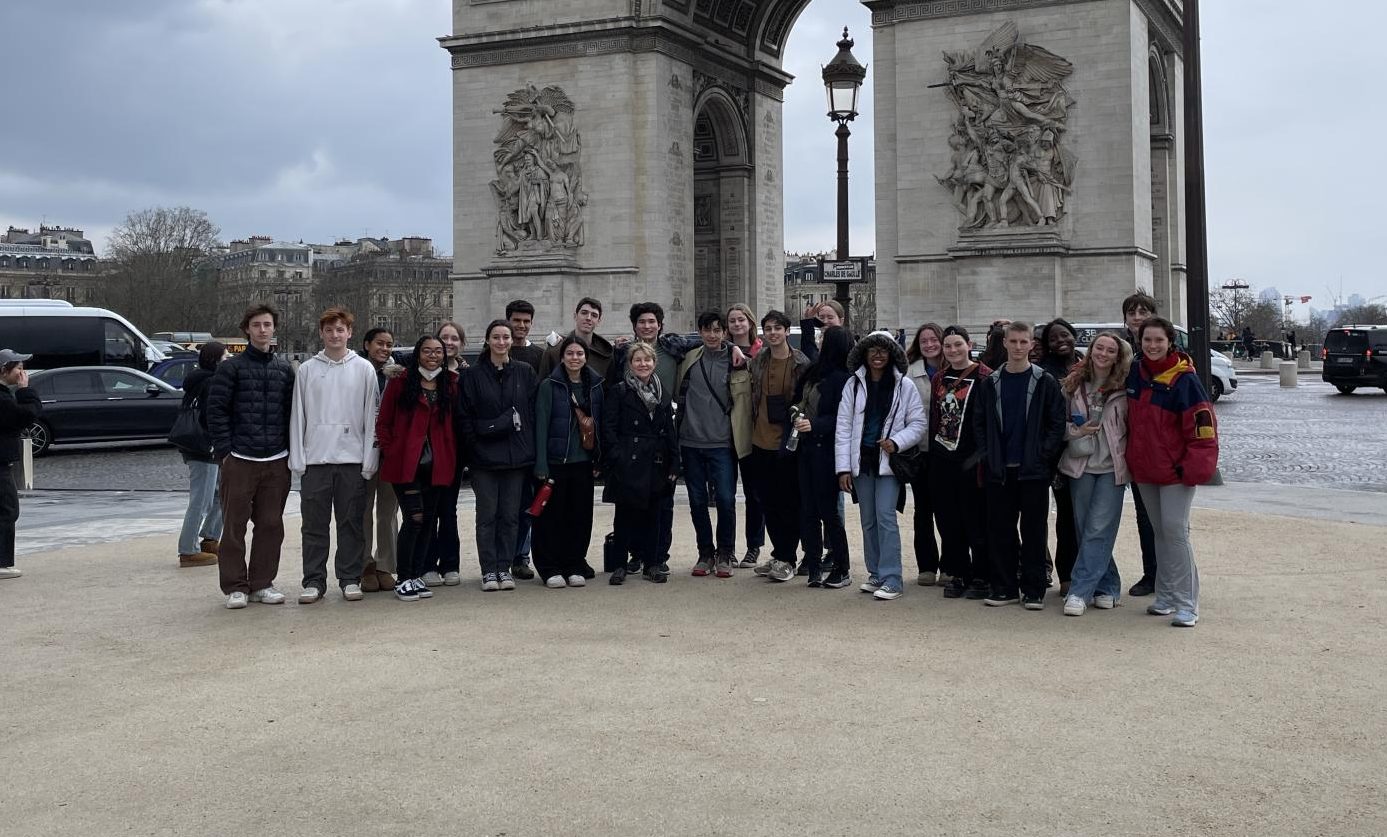
For years, Koniezhny has led Friends School’s language immersion trips to France every other Spring break.
“I used to be so fast that the kids had a hard time keeping up with me,” she says. But in October of 2023, she took a fall. “It felt like my left ankle never fully recovered.”
When she chaperoned students in March 2024, Koniezhny had a hard time keeping up with them.
“So when I got home, I went to the doctor thinking I needed help with my left ankle,” she remembers. “I was completely surprised by the ALS diagnosis.”
Her diagnosis was Amyotrophic Lateral Sclerosis. It’s a progressive disease that affects nerve cells in the spinal cord and the brain, specifically upper and lower motor neurons. A person’s brain essentially loses the connection with their body’s muscles.
Biology teacher David Brock explains that this disconnect can be torturous.
“Imagine feeling an itch and literally having no control over the ability to address that itch whatsoever,” he says.
As the disease progresses, a person loses the ability to walk, talk, swallow, and eventually, breathe. After diagnosis, people tend to live around two to five years.
For Koniezhny, an active 60-year-old, this was devastating news. At first, she says, she was in denial. “I refused to believe it – until my body began demonstrating to me that I do, in fact, have it.”
When that happened, Koniezhny realized she had a choice to make about how to spend the time she had left. Should she continue to work at Friends?
For as long as she can remember, junior Ellie Oakes ’27 has known Koniezhny.
“She’s worked with my mom forever, and she’s always been a part of my life,” Ellie says. “She’s more of a family member than a teacher.”
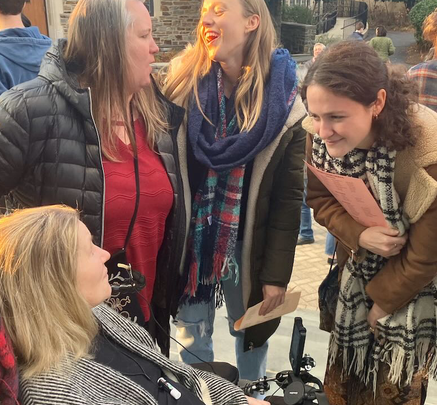
When Ellie was little, she would sometimes play with Koniezhny’s cats in her office while she and Ellie’s mom were in meetings. Being so close, she found out about the ALS diagnosis before the rest of the student body. The Oakes family knew that Koniezhny had started falling unexpectedly.
“And so my mom was really concerned,” Ellie remembers. “And one day she found out and she was really upset, and then I found out what happened.”
For Ellie, the hardest part was that not much can be done for ALS patients.
“That was kind of the biggest shock, or the biggest heartbreak, was that there’s nothing, ’cause so few people get it,” says Ellie. “It’s amazing [that there is] medicine stuff to help, but nothing’s going to [cure it].”
Although there is no cure for ALS, Koniezhny became a proud participant in pioneering research happening at Johns Hopkins. There, scientists are now testing the effects of psilocybin – a natural psychedelic compound found in “magic mushrooms” – to combat depression in patients with terminal illnesses. Koniezhny was the first ALS patient to sign up for the study.
Mr. Brock, who teaches neuroscience at Friends, explains how the drug might help.
“To use the itch example, you and I might feel a lot of annoyance at the itch. What the drugs are probably helping her amygdala and hippocampus do is be able to experience the itch without it being annoying,” he says. “What they’ve been showing is that it allows the brain to feel a sense of peacefulness.”
Loved ones needed other ways to make peace with Koniezhny’s diagnosis.
“It sucks because, like, there’s nothing anyone can do. You can only make her comfortable,” says Ellie.
So Ellie found a way to help make Koniezhny comfortable.
Koniezhny’s office was on an upper floor of the Upper School, a century-old building with no elevator. That wasn’t going to work. Her “limb-onset” ALS meant that moving her legs and arms might get harder quickly.
That spring, Spanish teacher Tom Binford was retiring. His big, bright, ground-floor classroom was newly free, so colleagues persuaded Koniezhny to relocate there. Oakes and former counselor Amy Shutt decorated the new room, and Oakes recruited Ellie to make it feel homey.
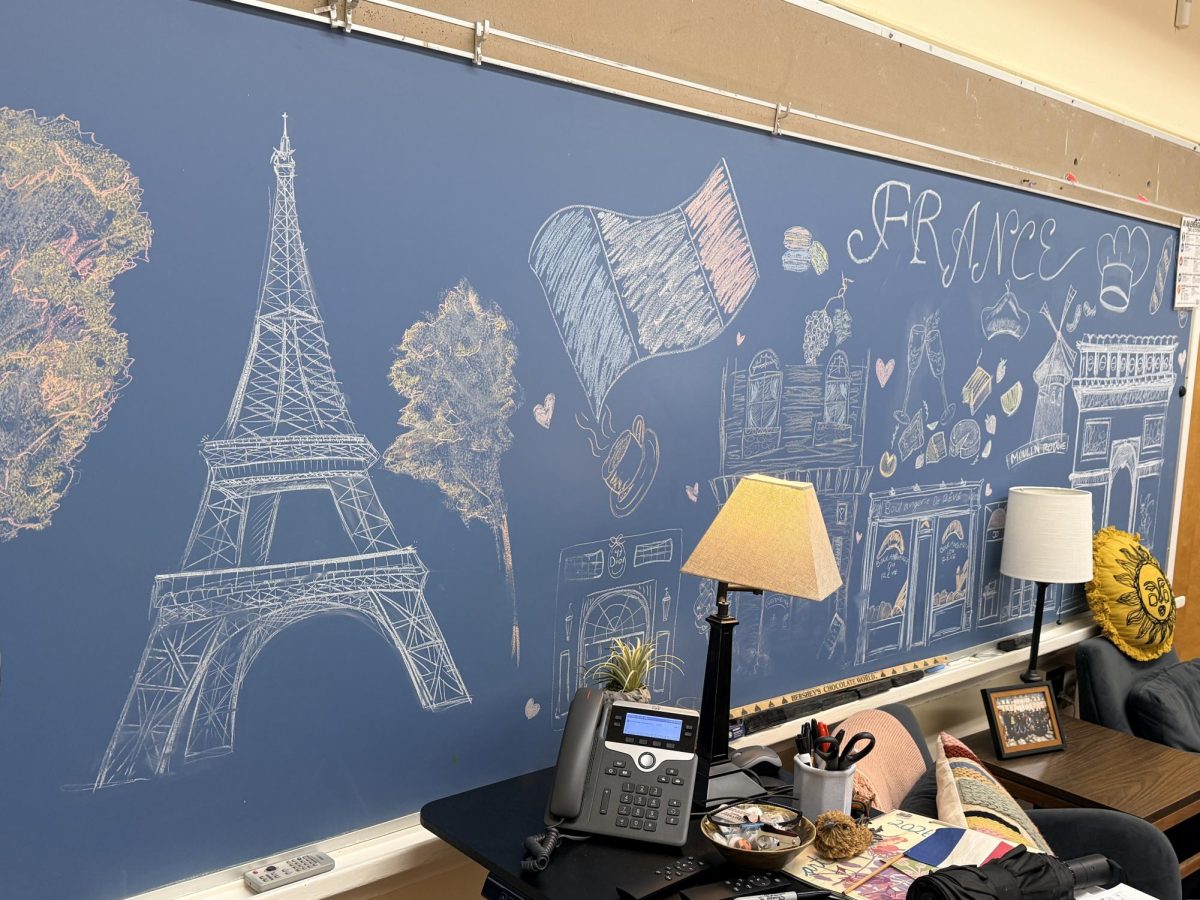
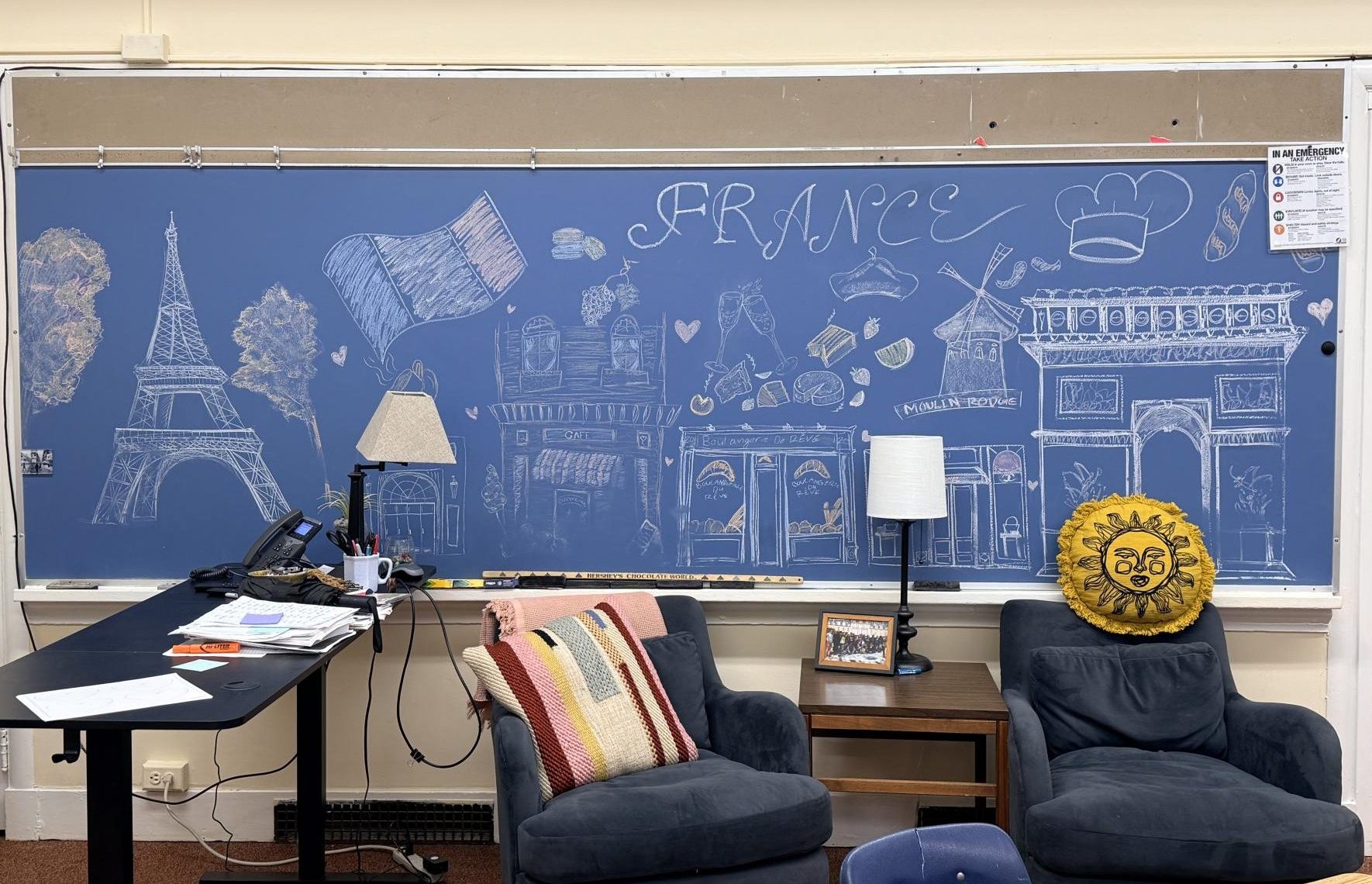
“My mom was like: ‘Is there something cute you can do for her room?’ ’cause she wasn’t able to go to France as she wanted to that year because of everything that was happening,” Ellie says. “So I was like: ‘What about we do something in her room that’s kind of more French, you know?’ And she was like ‘Yeah, paint a mural.’ ”
So over the summer, Ellie and her friend Lily Roach ’27 filled Koniezhny’s chalkboards with symbols of France: The Eiffel Tower, the Arc De Triomphe, champagne, croissants, brie.
“I think it turned out pretty well,” Ellie says. “And it’s still up, which is really sweet. And she really appreciated it, which was awesome.”
Koniezhny had made her decision: she would stay at Friends. Finances played a role, but community made the difference.
“With any illness, one of the things that is really key is morale. And coming to school here every day is a real boost, because learning environments always have excited me,” she says. “The student energy keeps me energized and looking forward to every day.”
At the same time, she knew things would need to change.
In fall 2024, a new teacher joined the department. Isabel Cooke ’16, was a former student and advisee who’d traveled to France with Koniezhny.
“She was always an inspiration, how easily she could navigate France and new situations and people,” Cooke remembers. “I just knew leaving Paris that first time that I was gonna come back.”
Last year, the pair co-taught French V. When the semester began, Koniezhny stood at the board, driving the lesson, holding the chalk.
“I was basically her assistant and she was the master teacher. I learned so much from her,” says Cooke. “I learned that it’s more about quality over quantity, so not pushing a bunch of material, but making sure your students really know what they’re learning, even if it’s a small grammar concept you focus on for a week. And dynamic ways of teaching and getting the kids moving. It really felt like a college class.
“So I felt privileged to be able to work under her [and] be her little apprentice.”
That school year, Koniezhny went from standing, to using a walker, to using a small wheelchair part-time, to needing a motorized wheelchair full-time. Midway through the fall, during a lesson, Koniezhny handed her chalk to Cooke, and asked her to write with it.
Cooke says working closely with Koniezhny over that time changed the way she thinks about her own life.
“When someone you see every day has a disease like this, or is sick – I don’t know if you guys have experienced that yet in your lives, but you will one day – it makes you grateful for what you have,” she says. “And obviously, it makes me think about what she doesn’t have anymore.
“So if I go for a run and I’m like, ‘Oh, I really don’t feel like this’ or ‘I’m so tired’, I try to remind myself of the fact that I have a body that allows me to exercise, and give thanks for that.”
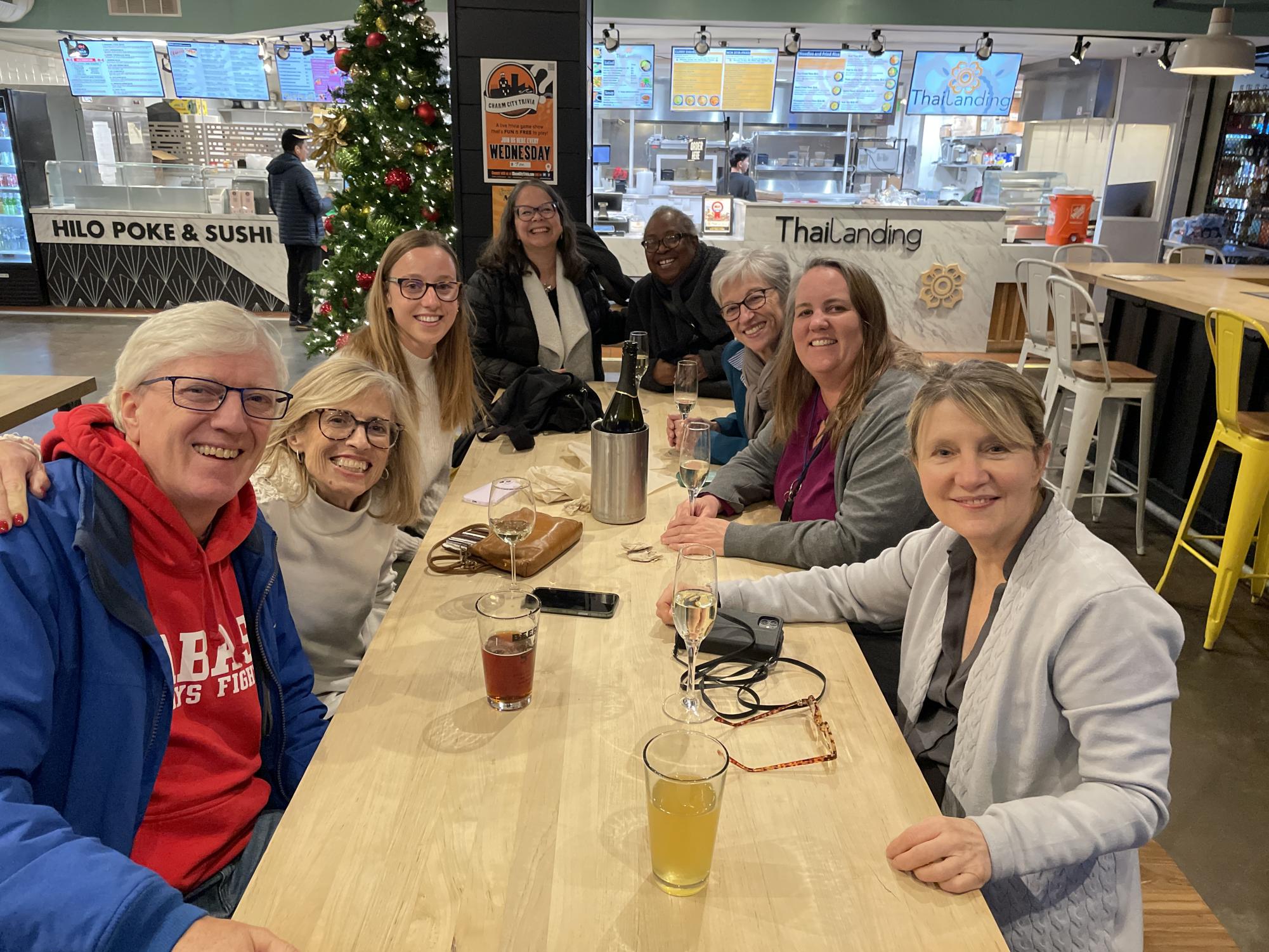
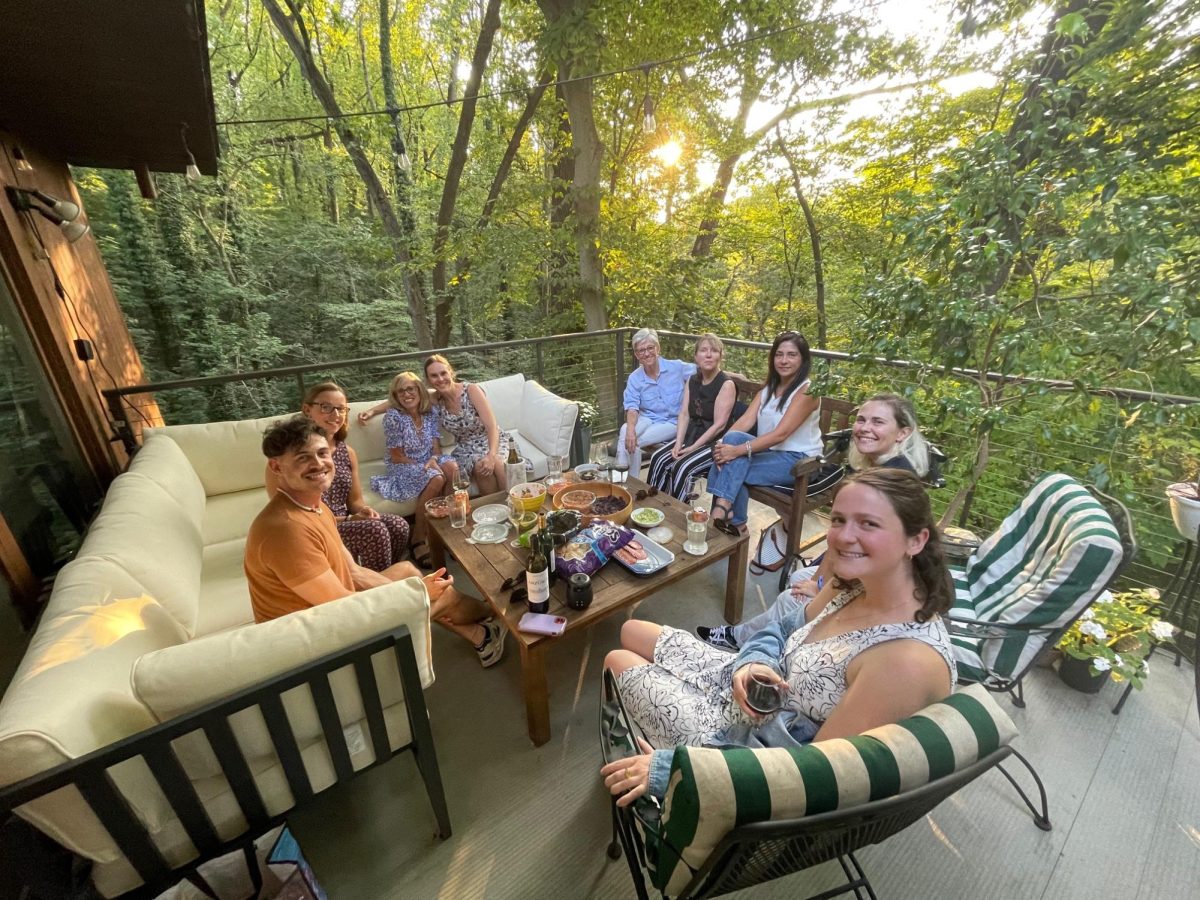
For many years, Koniezhny has helped new teachers adjust to life in the Upper School. Spanish teacher Marta Reinaldo, who joined the faculty in 2021, visited her many times when she was learning the ropes.
“I went to her with thousands of questions. I thought I had to know everything, so I was like, ‘I’m sorry for asking.’ And she said, ‘You don’t have to know everything,’ ” Ms. Reinaldo remembers. “I was like: ‘You do know everything about this school.’ She was like: ‘No, there’s been a lot of things that I don’t know.’ ”
Koniezhny’s door was always open.
“I remember knocking, and I was like, ‘Are you busy?’ And she was like, ‘No, not for you,’ ” says Reinaldo. “But she was busy, always.”
Reinaldo’s first year at Friends, the young teacher was feeling homesick on her birthday. To her surprise, Koniezhny remembered it.
“I didn’t even know how she knew, [but] she said ‘Happy birthday’ to me,” Reinaldo says. “She always acknowledged how it was an important day for me and I was so far away from my family and my friends. ”
In time, Koniezhny felt like a surrogate family member.
“She just became… I cannot say ‘my mom,’ because no one can replace my mom. But something similar to that,” Reinaldo explains. “Like family.”
Head of School Christian Donovan came to Friends the year after Reinaldo. He quickly realized how indispensable she was.
“She is one of the people [who] helps this place succeed, in my mind. She does all sorts of things behind the scenes that students don’t see,” he says.
For example, “the entire Upper School schedule is basically built by Ms. Koniezhny – with a little bit of help from other people. But it really is due to her hard work that we are able to do this,” Mr. Donovan says. “[She] just [has] a tremendous commitment to supporting students.”
Upper School head Brandon Rogers agrees. He joined the community the year after Christian.
“My first year – I mean, and even until today, but absolutely my first year – I leaned so much on Ms. Koniezhny,” Mr. Rogers says.
As he got to know how the Quaker institution differed from other places he’d worked, he says, she saved him from many missteps.
“She has protected me, I think, from making [mistakes],” he says. “‘What could be a good decision at another school,’ she would say, ‘I don’t think that’s gonna fly here.’ So I’ve really appreciated her wisdom and… knowledge of the culture.”
That, and her work ethic.
“It’s not just that she is a workhorse. I mean, she is; she’s one of the hardest working colleagues that I’ve ever been with, and she holds herself to such high standards,” says Rogers. “But she’s got a wisdom that comes with not just experience in education, but also experience in knowing our school.”
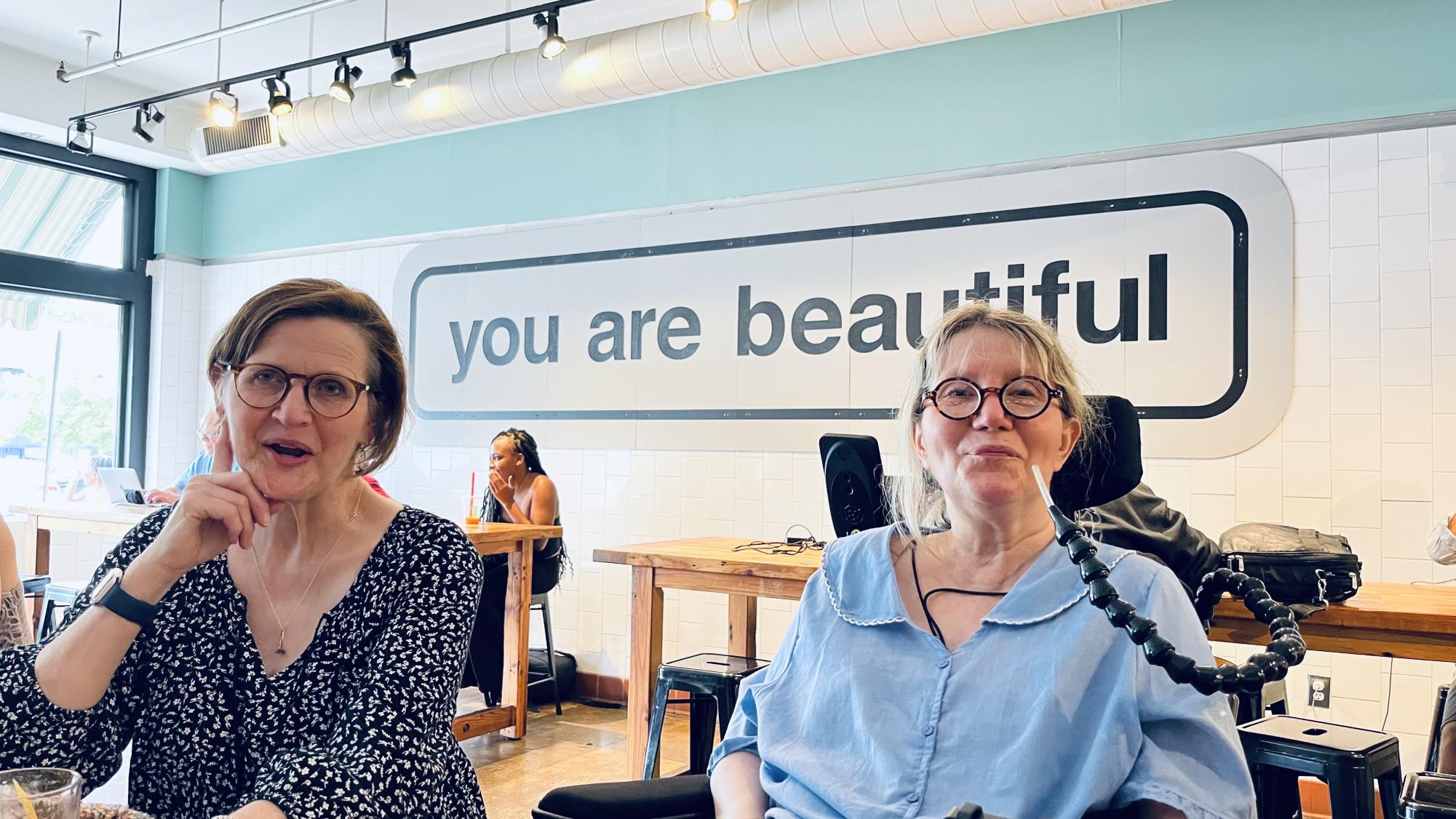
It’s not just new folks. Over the years, Koniezhny has touched the lives of many coworkers.
“I would say she’s one of the most important people for me,” says Lee Roby, a longtime friend and colleague. Working together in the language department for nearly two decades, Russian teacher Ms. Roby and Koniezhny have formed a close bond.
“One of the things I love about her is that all the way through her teaching, she’s been a learner,” Roby says. “She always wanted to learn new things and to think about how our department could improve.”
Friends School’s language immersion trips run every other year. Koniezhny got her diagnosis following the 2024 French trip. Last year, it became clear that she would not be able to go on the French trip in 2026.
“This will be the first year since 2008 that I have not traveled to France with students,” Koniezhny says.
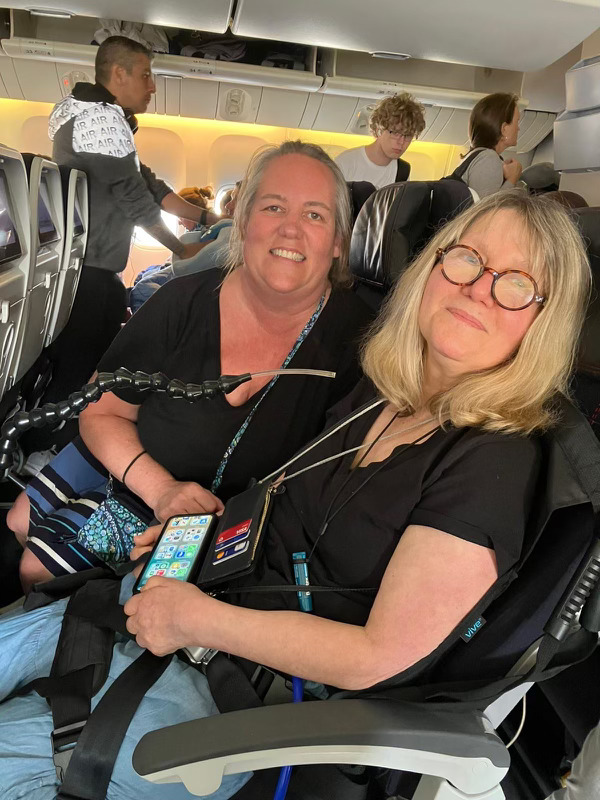
So last summer, Koniezhny and her partner, Towson University film professor Danny Mydlack, decided to make one last trip to Lyon to say goodbye to the country and the friends she has made there.
She asked Roby to accompany them. Roby says she was honored to be asked.
The trip was made possible in part by the financial help from a GoFundMe that friends organized for Koniezhny. But mostly, she was able to go because of the help from Dr. Mydlack and Roby.
Since she was unable to move in and out of her wheelchair, Mydlack set out to find something portable that could be used to make transitions possible while traveling abroad. To solve this problem, they used a homemade transfer board and a transfer sling. Working together, with the help of these devices, he and Roby could move Koniezny into and out of her wheelchair for the plane ride and other adventures.
Now, Friends juniors and seniors are getting their passports and suitcases ready to travel to France next month. French teacher Andrews, who went on the 2024 trip with Koniezhny, is preparing in a different way: facing the emotional weight of going without her friend and colleague.
“I mean, obviously that’s hugely sad,” she says. “We had a faculty meeting last week and I was supposed to tell the faculty about nuts and bolts of the trip: ‘Hey, these students are going, it’s these dates, they’ll have a planned absence, blah, blah, blah.’ Like, it wasn’t anything. I thought I had it all organized and well prepared.
“And then, I don’t know,” she says. “I just, I couldn’t speak.”
Traveling together with someone for two weeks creates a strong bond, Andrews says. On their 2024 trip, the pair talked about everything. She says that’s what she will miss most: talking with Koniezhny.
“Her wisdom, her sense of humor, her knowledge about everything,” she says. “Yeah, I think it’ll be. It’ll be. It’ll be hard.”
And also, Andrews says, it’ll be good. Many students will be traveling abroad for the first time, having language immersion experiences that could change the course of their lives – as one once did for Koniezhny.
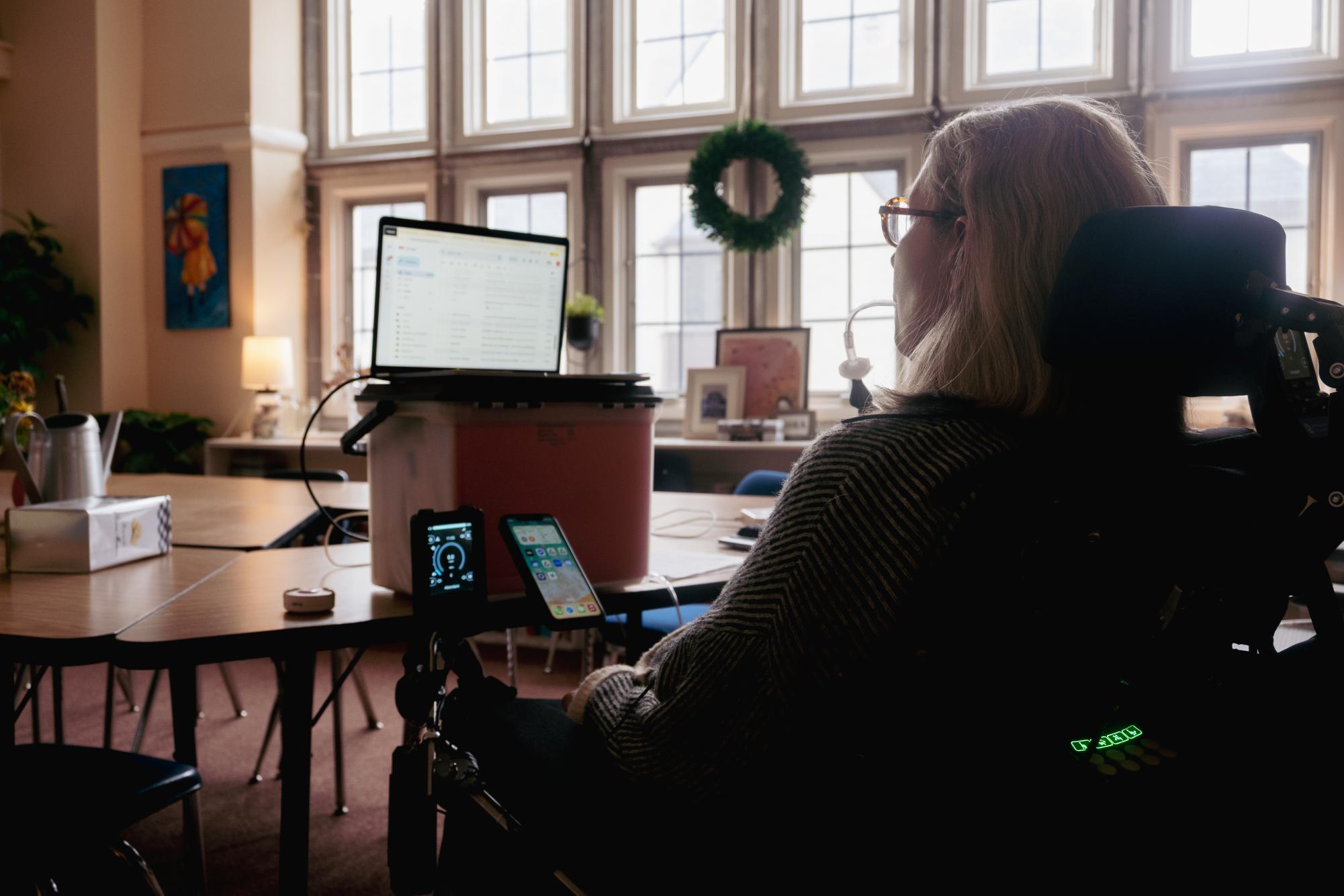
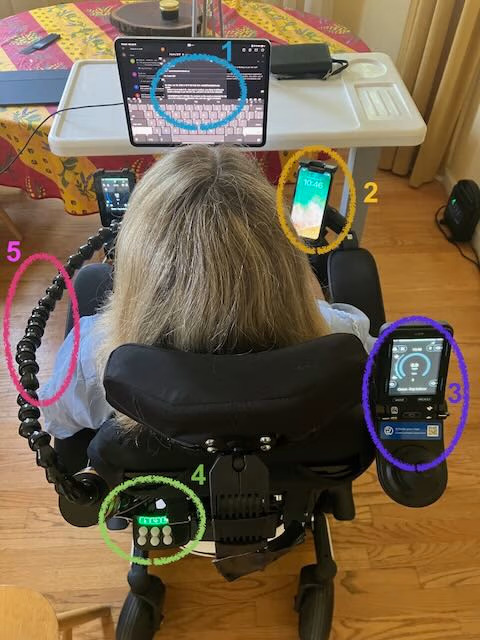
In her Assistant Principal role at Friends, what Koniezhny does hasn’t changed much since her diagnosis. But how she does it has changed a lot.
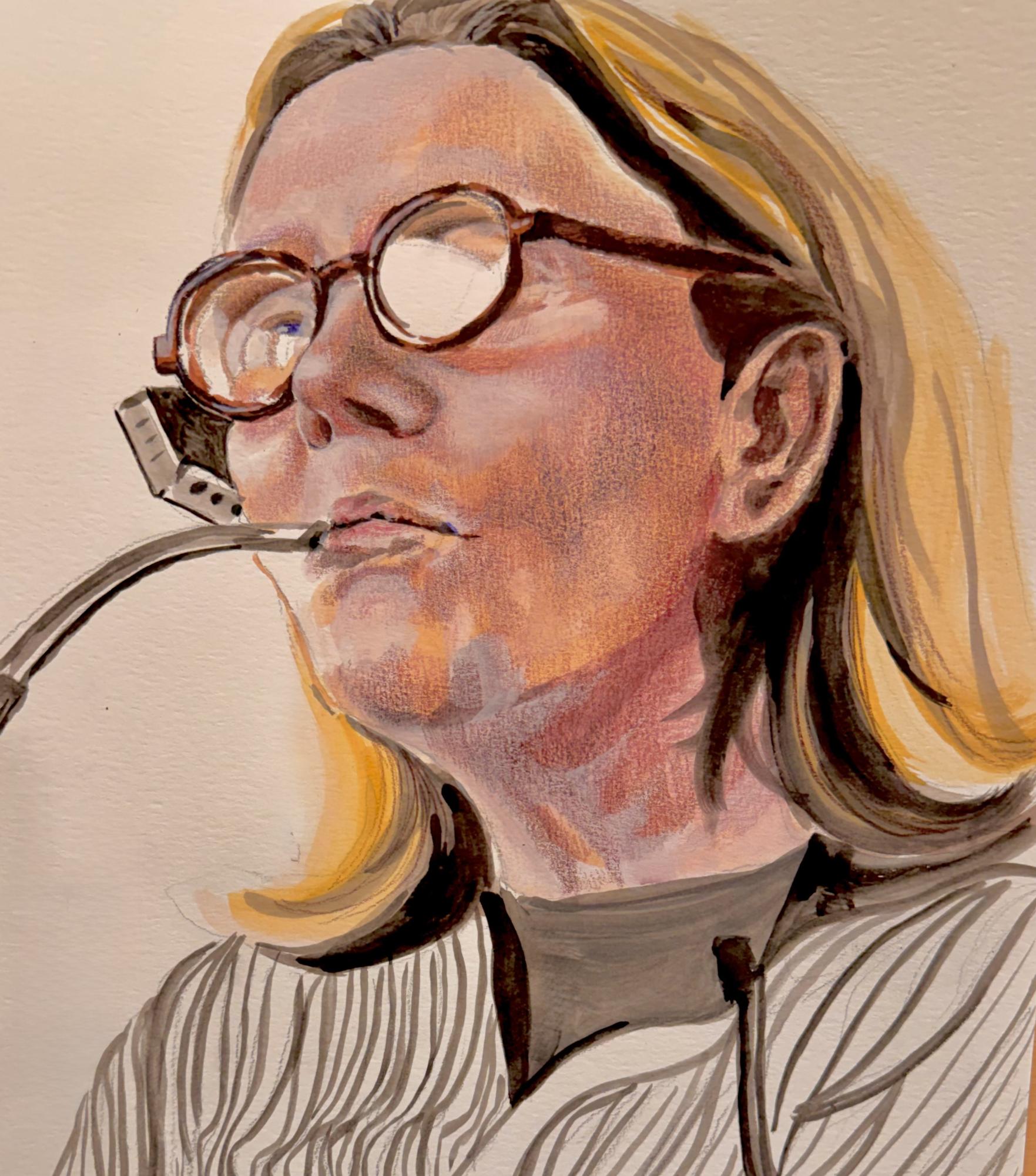
In November 2025, she demonstrated for a group of Quill reporters some of the cutting-edge assistive technologies that her partner refers to as “adaptive bling.”
Because of the fast-changing nature of her condition, the tech she uses most has changed quickly also. Last summer, a voice-controlled iPad and iPhone, and a thumb stylus she could use to swipe screens when her fingers could no longer uncurl, were invaluable. By mid-fall, her hands were paralyzed and the stylus was useless. Instead, she got a straw-like device she could blow into to move her laptop mouse, and another that clipped to her glasses frame and allowed her to control her cursor.
When the market didn’t supply what she needed, Mydlack often invented a fix, cobbling things together and innovating to meet the needs of the moment. Thanks to his efforts, Koniezhny was able to keep doing things like checking and responding to email and hopping on Zoom calls, even when her hands no longer cooperated.
“Technology makes this possible,” she told reporters.
Upper School principal Rogers recalls how, in one meeting, he was having trouble finding something on MyFriends, the school’s Learning Management System. Koniezhny used her assistive tech to get to it instantly.
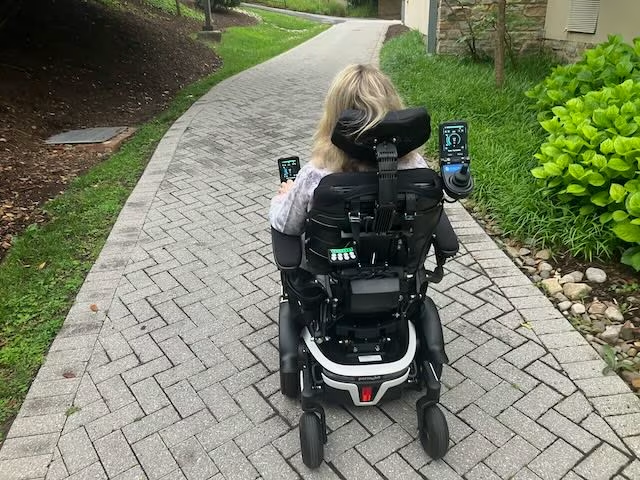
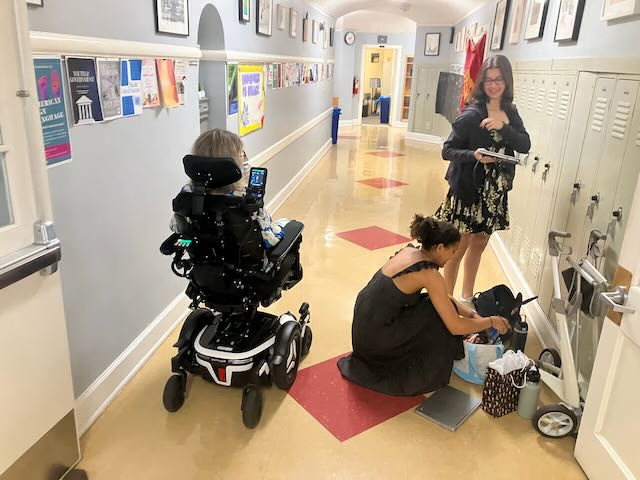
Though Koniezhny was able to keep working, and many colleagues helped in different ways, the campus itself didn’t make it easy.
The path down from the Upper School faculty parking lot to the quad is steep, uneven, and gets icy in the winter. But this lot is the most accessible way to access the ramp into the main building. (Mydlack got around this problem by driving down that path each morning and unloading her wheelchair from their van outside the library.)
Built around 1931, the Upper School building is full of staircases and has no elevator. Wheelchair users can only access the main floor, entering by a ramp outside the Library door. The two upper floors are entirely inaccessible.
Newer buildings on campus also have issues with accessibility. The elevator in Forbush Hall, which was built in the 1970s, is working now. But it was out of order for most of the past year and a half, after a pipe broke and flooded the building.
“Our community has some room to grow in terms of dealing with disability,” says Director of Upper School Counseling Makeda King-Smith. Working closely with Koniezhny on the administrative team for the past several years, Ms. King-Smith witnessed her struggles with access firsthand. “Even just being able to get in the building to be able to do her job was really challenging.”
Koniezhny isn’t the only one experiencing challenges with accessibility on campus. Jennifer Robinson, Director of Academic Technology and Libraries, also uses a wheelchair.
“It[’s been] helpful to have someone who I could talk with that really understood my frustration when a bathroom wasn’t accessible, or I couldn’t get in a door,” she remembers. “I think there’s a sense of kinship and camaraderie around that.”
Robinson says she admired how Koniezhny waited until after a pivotal meeting with school leadership on the issue of accessibility to reveal her ALS diagnosis. That drove the point home.
Designing accessible space is a struggle around the world. It can be hard for able-bodied people to imagine the difficulties that may make a space inaccessible for disabled people, or the nuances that come with designing accessibility. Ramps must have proper inclines, doorways need to be wider, and elevators should be placed near accessible entrances.
At Friends, there are some bright spots. The two-story Science/Math building has a consistently working elevator, as do the Middle and recently renovated Lower School buildings. In 2022, Friends adopted a long-term Campus Master Plan championing accessibility.
Head of School Christian Donovan says Koniezhny helped teach him how important accessibility is to a community.
“She suggested that when you make the facility more accessible to people with all sorts of physical abilities, you improve the buildings for everybody – not just the people who might have trouble getting around. I’ve taken that to heart, I feel like,” he says.
“The improvements that we need to make will take a long time, likely,” he continues, “but we’re continuing to work on them.”
King-Smith says Koniezhny’s experience should be a wake up call for Friends about whether we’re living our values as a community.
“What are the ways that we can prioritize this as a school; what resources are we putting towards it? What types of awareness events are we doing?” she asks. “If we’re going to say that this is who we are, that we’re inclusive and we want everyone here, what are we actually doing to make that possible and to have those people feel welcomed?”
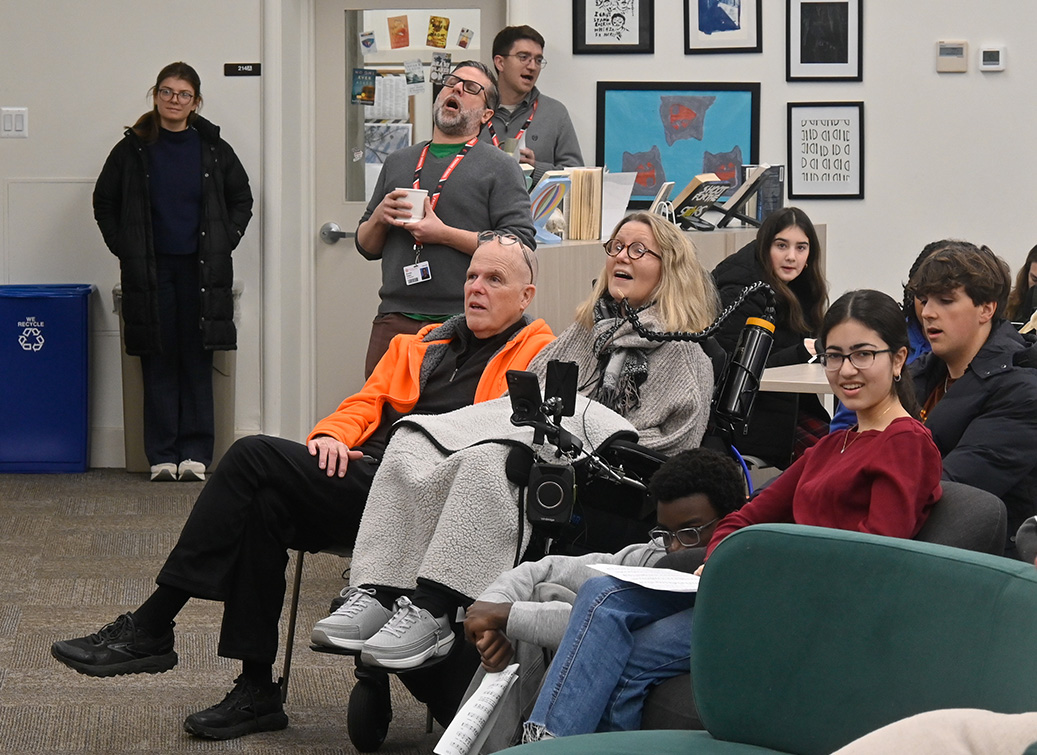
Students and colleagues say Koniezhny’s illness has caused them to think about the meaning of community at Friends. More than just a school you go to, they say, it’s about the people you chose to surround yourself with every day, and how you treat them.
Multiple interviewees echo the thoughts of Will Dalton ‘28.
“Most people won’t ever know how much they’re appreciated. The only time when it’s really discussed is when they’re gone,” Will says. “So I really like that you’re talking about her while she’s still here, so that she can still read the story and listen to everything.”
This past fall, Koniezhny proctored a Quiet Study session that Will signed up for on a Community Day. Will says sometimes, during study halls, he doesn’t focus on school work because he’d rather spend the time composing music.
But when Koniezhny proctored, it felt different.
“You know, she’s coming in when she’s suffering and in so much pain…. I mean, it’s crazy brave to do all that,” says Will. “I felt responsible to, like, need to do actual work. People at this school, they’re straightening up because she’s so committed.”
Although no current Friends students have been taught by Koniezhny, many have been moved by her presence.
Zuri Davis ‘27 is one of them. She got to know Koniezhny a little last spring, when she herself was struggling with mobility.
“When I sprained my ankle and was on crutches, she was very concerned for my health, which I thought was sweet,” she says.
Zuri says Koniezhny’s resilience is what stands out to her the most.
“It’s a very remarkable thing to continue coming to school when you’re sick,” she says. “I’m proud of her for making that choice, because it’s not an easy thing to do. It’s not easy to show up every day when you’re at limited capacity.”
In early November 2025, at the end of a Collection presentation about semester abroad opportunities, Koniezhny spoke to the student body for a few minutes, her voice halting. It was the first time she’d spoken to such a large audience in months. For many in the room, it was the first time they realized how much, and how quickly, her situation was changing.
Zuri went home and told her little sister Zara Davis, ‘30 about it. She said that as they listened, everyone sitting in her row had been in tears.
Then, in December, Zara learned that her middle school choir, the Apollos, was planning a concert in the Upper School library. It would be a surprise performance for Koniezhny – and the Upper School – to show thanks for her time at Friends.
Zara was a little worried. The group would be singing a few songs she knew – plus some new ones, in French.
“I take French, but singing is a different thing,” she remembered. “So I was a little nervous.”
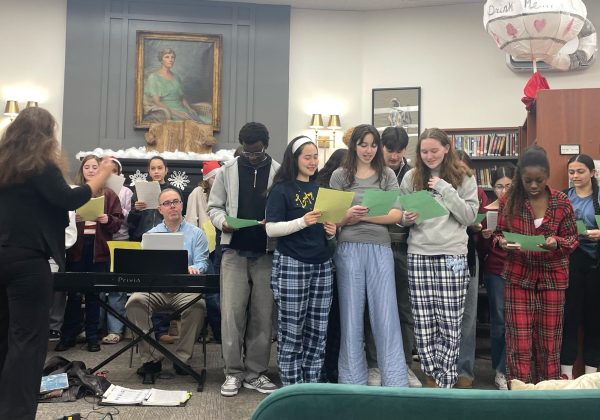 | Upper School French students (in PJs for Pajama Day) joined the Apollos to sing French Christmas carols for Ms. Koniezhny. (Miles Cole )|
But she thought about Koniezhny, whose voice had moved her big sister to tears. Music teacher Rebecca Rossello had also told students that Koniezhny loved French music.
“She was like: ‘We should go to the Upper School and we’re gonna do a concert for her, so that she can feel happy and well loved, and we can show that she’s a part of our community,’ ” Zara remembers.
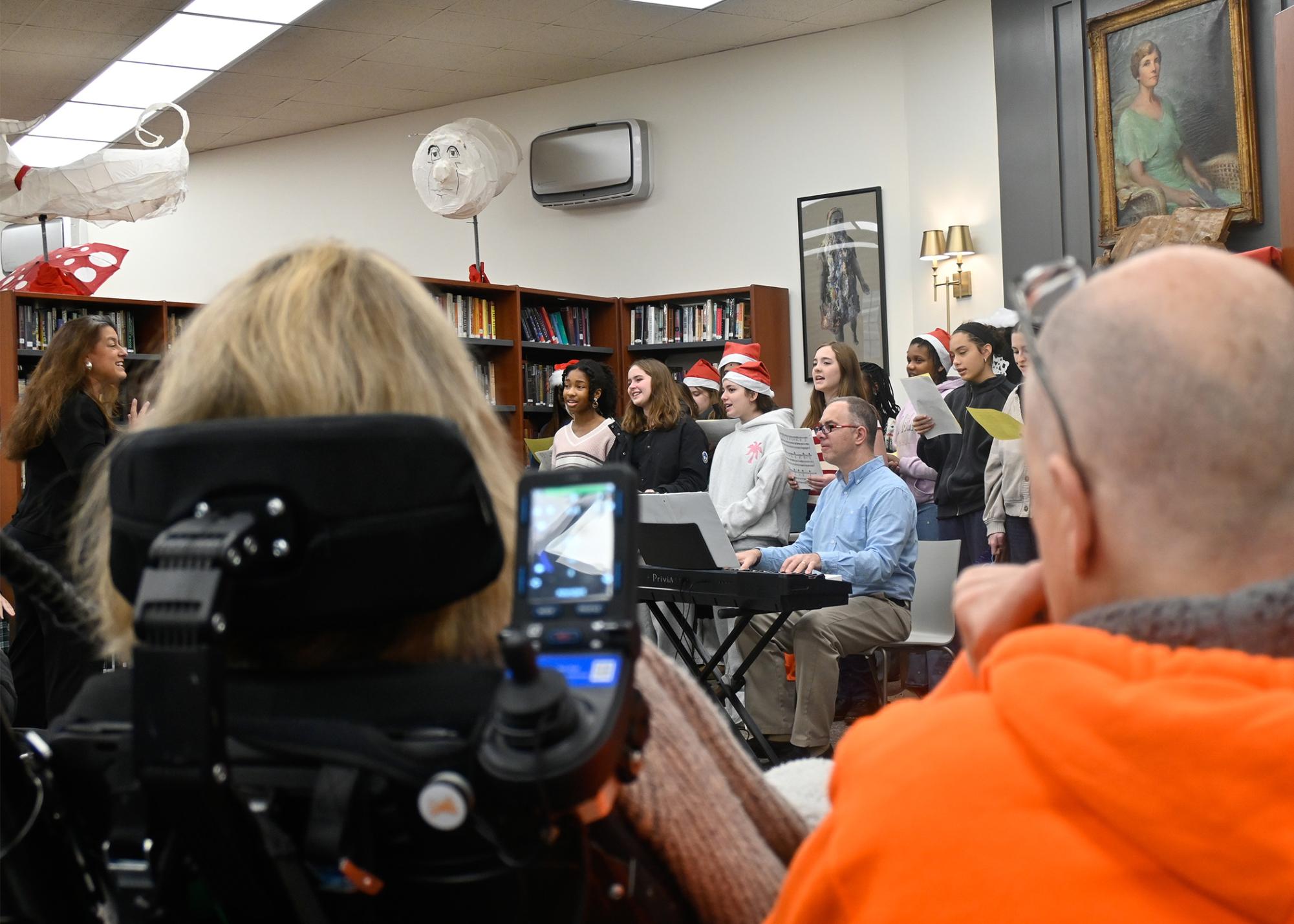
Early on the morning of December 11th, 2025, over 100 Upper School students, teachers, and administrators filled the library, making light conversation as snow coated the ground outside. The chatter faded as Zara and her fellow middle schoolers entered, dressed in Santa hats and menorah glasses.
Students rearranged chairs and couches to make a makeshift stage in front of the fireplace, and the choir began to sing. The set started with traditional holiday songs: “Frosty the Snowman,” “Jingle Bells,” “O Hanukkah,” and “Dreidel Dreidel.”
Upper School French students sat in the front row, wearing PJs for pajama day. Midway through the concert, they rose from their seats, joining the choir to perform some traditional French Christmas songs: “Il est né le divin enfant” and “Noël Nouvelet.”
When Ms. Rossello encouraged audience members to sing along, Koniezhny and Mydlack did. Afterward, he remarked that it was the first time she had sung in months.
Zara was happy. Several times, she had peeked over and seen Koniezhny smiling.
“I hope she liked it! It was nice to see that we could do something for her that, like, took her mind off of the sickness for a while,” says Zara. “And I felt proud that we, as 8th and 7th graders, could do that for her.”
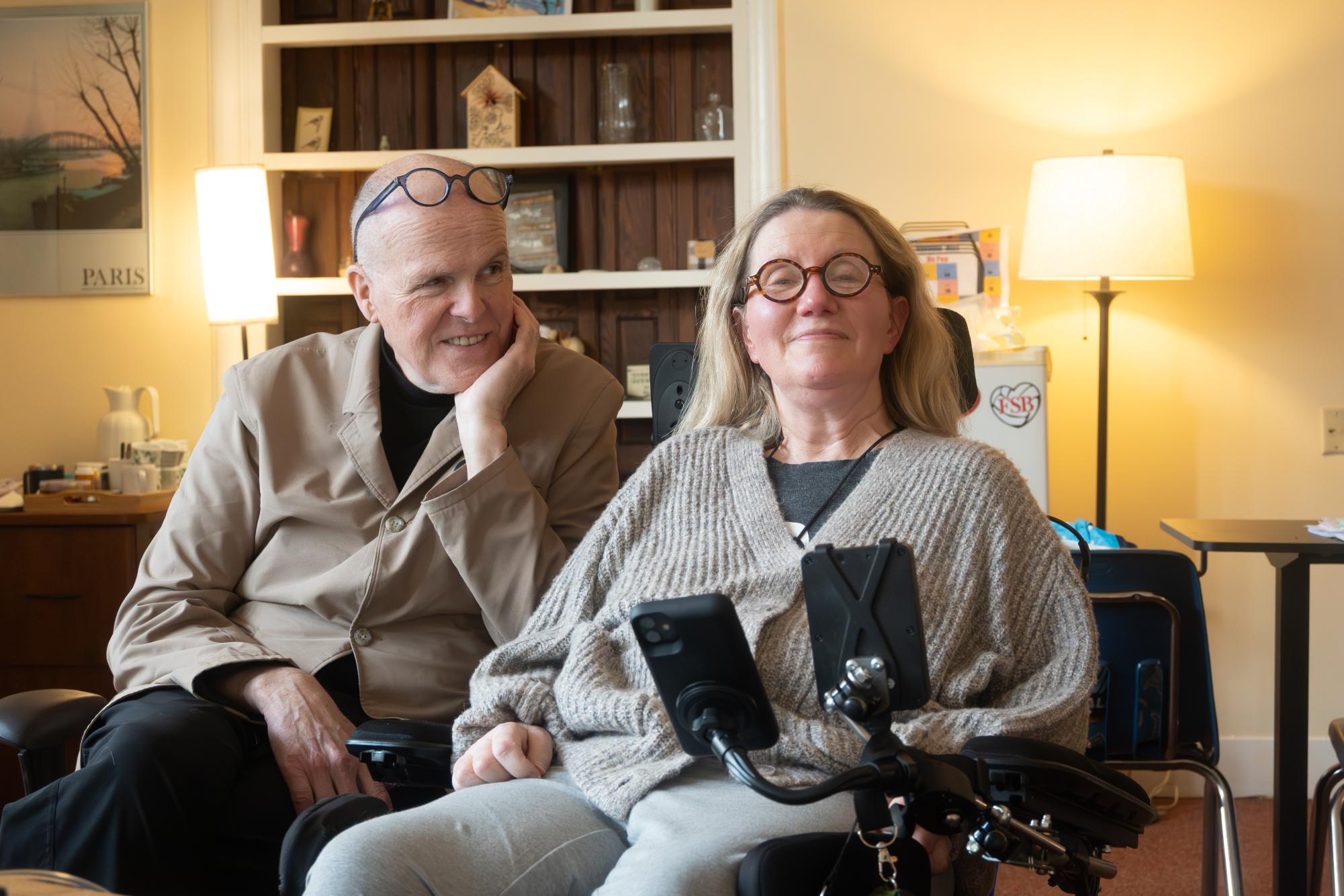
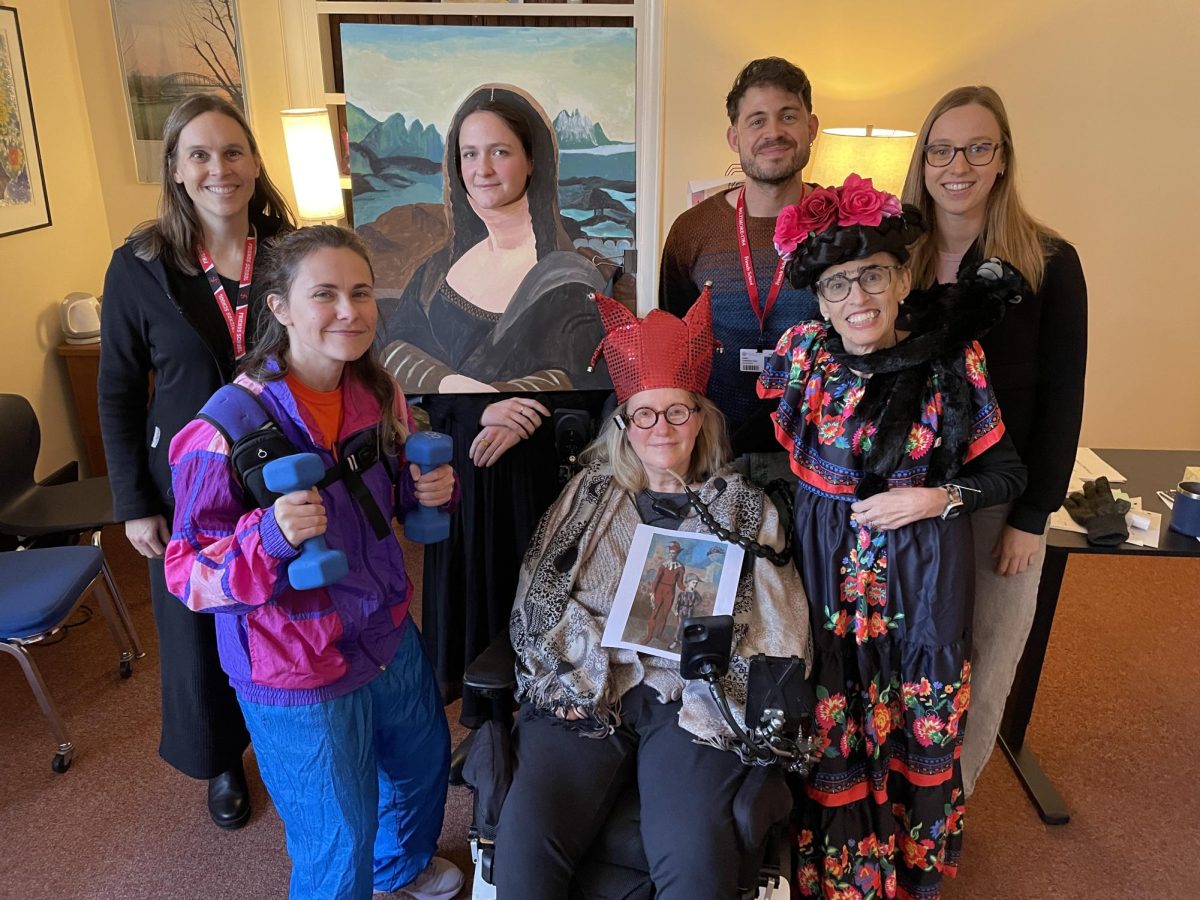
One thing many people remark on about Koniezhny is her kindness. While she has always been kind, for much of her career she was guarded at work.
After her diagnosis, she started cracking more jokes. She smiled more. Colleagues observed that her relaxation, warmth, and sense of humor actually seemed magnified by her illness. Oakes says that’s no accident.
“She said to me, not too long ago: ‘My job is to find joy in every day,’ ” she says. “For a person who a year and a half ago was doing a Zumba class, and now can really only move from the neck up, to say that and to find joy in every day is just, I think, an inspiring thing.”
When Oakes had a new baby and was trying to figure out a new job with a new colleague, Koniezhny showed up for her. The past couple years, Oakes says, she has had a chance to return the favor.
“I think that’s what defines a chosen family. Like, you’re born into a family. And then, as you get older, you have a chosen family that you surround yourself with. [And] family just kind of shows up, especially when there’s real personal challenges,” Oakes says.
“People often don’t know how to support each other when there’s big things that happen, and really all it is is just being present,” she continues. “I mean, I’m no doctor. I’m not going to cure anything. I can’t take anything away to make them feel better. But I can just be present as much as possible.”
Upper School Assistant Principal Travis Henschen agrees. For him, too, Koniezhny has become not just a colleague, but a friend. The past few years, he says, she’s opened up to him more, from her love of gas station coffee to her wicked sense of humor.
“I’ve come to have a fuller sense of her personality, and she’s just really cool, really funny, extremely smart, incredibly hardworking. She shows up for everyone, every day, and I think you all saw that,” he says. “So I feel like there’s a hole in the school right now.”
In other words, Henschen says, Koniezhny has shown up not just for individuals, but for the school as a whole.
“I think she really embodies Quaker values, and she just loves this community so much,” he says. “The fact that she came in every day to work and be with us over the last two years, I think it just proves how much the community means to her.”
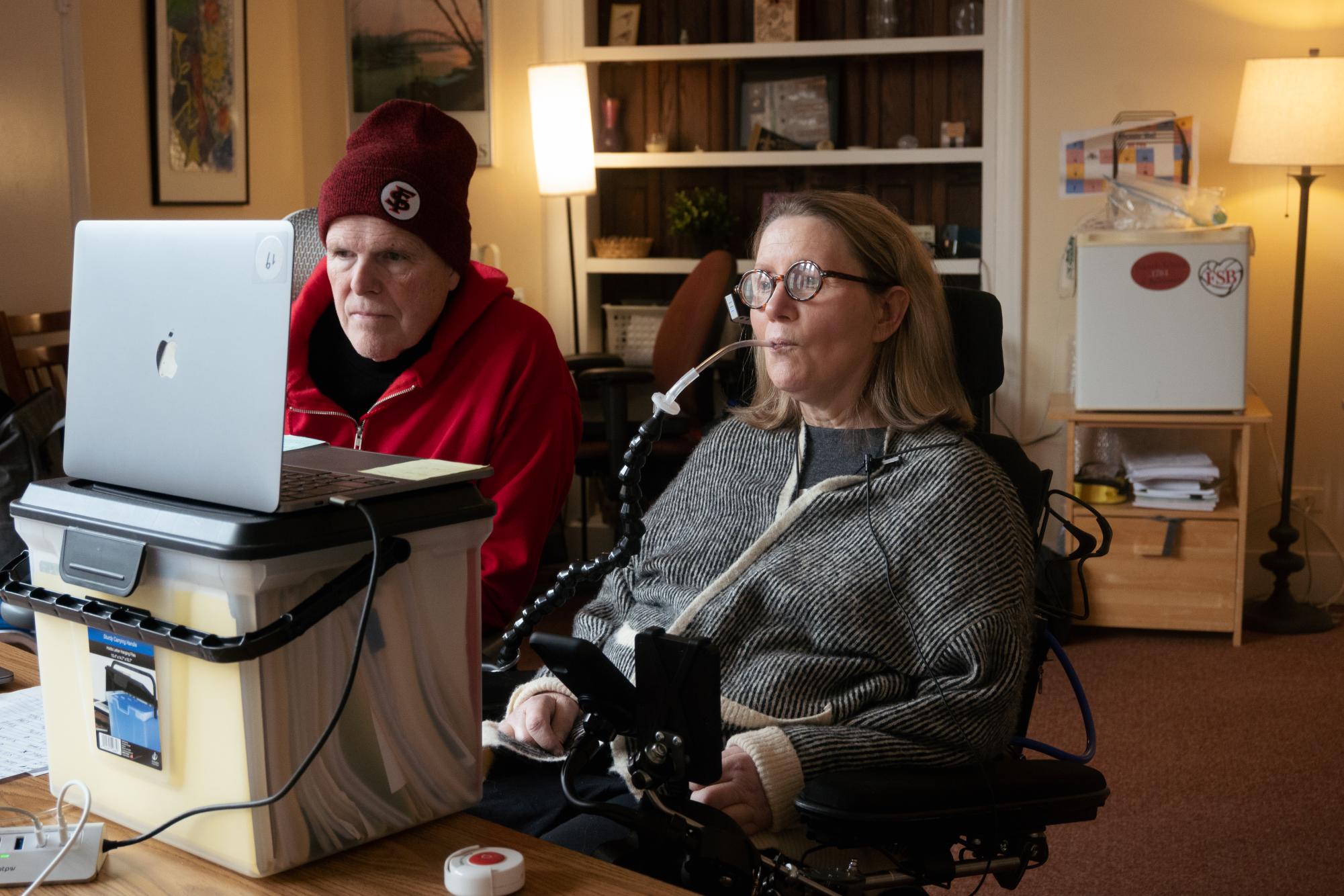
In her last interview with the Quill in December, Koniezhny’s speech was slowing. As a reporter filmed, she talked about everything from her philosophy of teaching, to vampire movies, to crafts she used to enjoy: glassblowing and paint-by-numbers.
“By the way, there’s no shame in it,” she joked about that last hobby.
She also discussed her decision to stay at Friends for what she knew would be the final years of her life.
“What is happening I have no control over. What I do have control over is my attitude and my reaction to the illness. So for me, it was a no-brainer that if I could continue to contribute at school, that [was] going to be a much more satisfying way to spend my time than being at home,” she said. “I have no regrets at all about that decision. I love being here every day.”
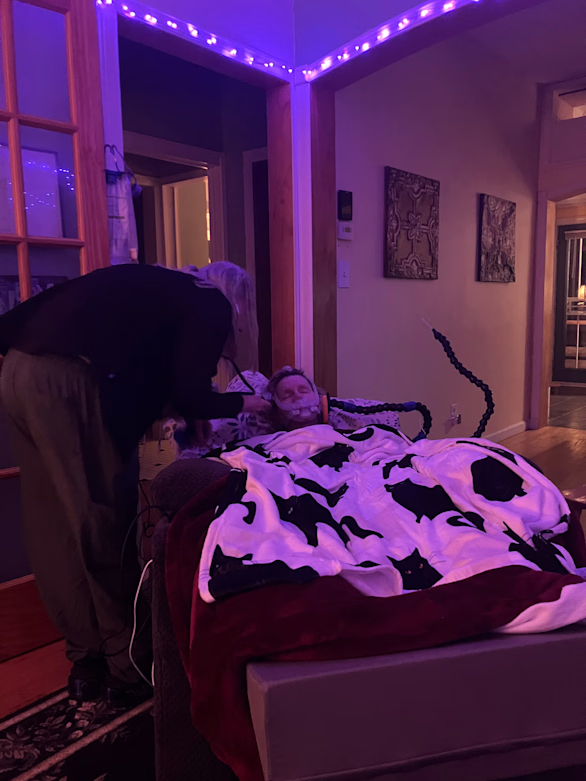
On February 11th, her partner, Mydlack, posted an update on CaringBridge. Koniezhny has lost her ability to breathe independently, and is now connected to a constant supply of oxygen through a face mask.
Due to difficulty swallowing, she gets nutrition through a feeding tube. She hopes to start using an eye-controlled device that will speak using her voice, reconstructed from recordings she banked over the summer. Mydlack is always with her, providing constant care, scratching itches, and responding to issues with the machines.
“We both cry a lot, but we endure,” he wrote. “She’s completely present, lucid, and undiminished in her mind and awareness; funny, brilliant, wise, and sweet as ever.”
Update, Monday, March 2, 2026: This morning around 1:30 am, Koniezhny passed away in hospice. Mydlack was with her, and updated loved ones on CaringBridge, writing of the previous day, when loved ones gathered at her bedside and shared stories and laughs. At the end, he wrote: “The coffee is now drunk. The cup remains. It smells of earthy sweetness. Christine has left us perfumed and stained.”

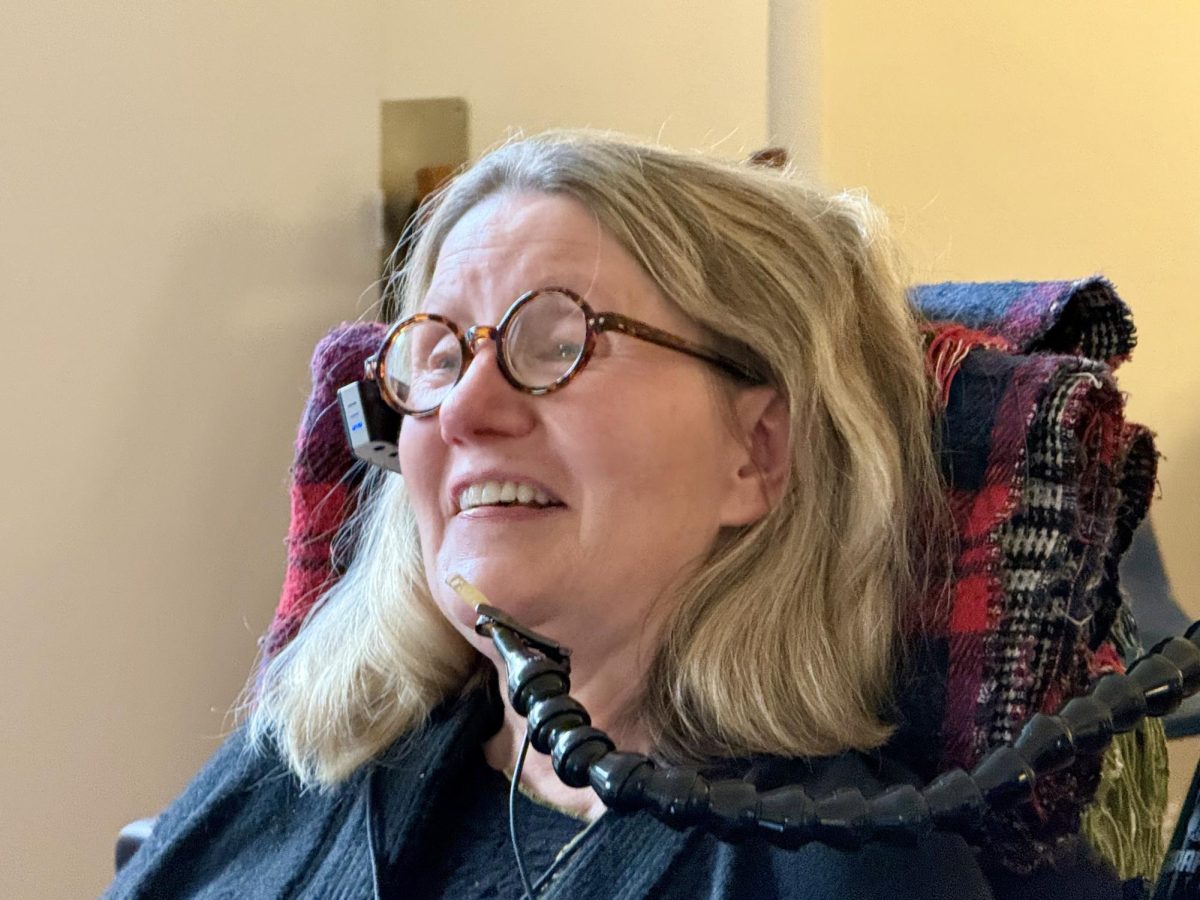
When this project began, Christine confided that she has always hated having her photo taken. Being the center of attention, likewise. She agreed anyhow, she said, because it could mean something to a community she loves – and people might learn from it.
On Friday, January 30th, I stopped by her room to update her on reporters’ progress. Sun streamed in the window behind her, lighting up her hair and the plants along the sill. Long rays hit the chalkboard Ellie and Lily had covered with baguettes and berets.
By this time, talking was laborious for Christine. But she was chatty and gracious as ever. She asked that the article include some information she’d been hoping to share with students in a Collection presentation, about ALS and the assistive technologies that had allowed her to keep working.
Then, her face crinkled into a grin. Slowly, syllable by syllable, she cracked a joke that was picked up by a tiny microphone and broadcast through the speaker hanging from her wheelchair.
“After all,” she said, “why let a good medical crisis go to waste?”
And she tipped back her head and laughed.
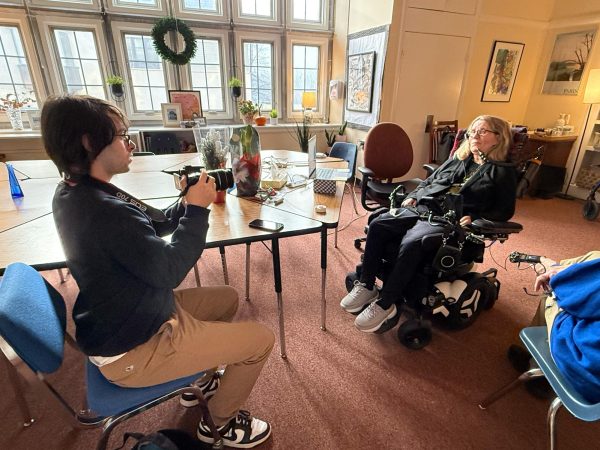 | Senior Micah Kramer ’26 films an interview with Koniezhny in her room in December 2026. At that point, when she spoke, a microphone on her lapel picked up her voice and broadcast it through a speaker mounted on her wheelchair. Film professor Mydlack plugged the Zoom recorder into the speaker to help capture the clearest possible sound. (Mary Wiltenburg) |
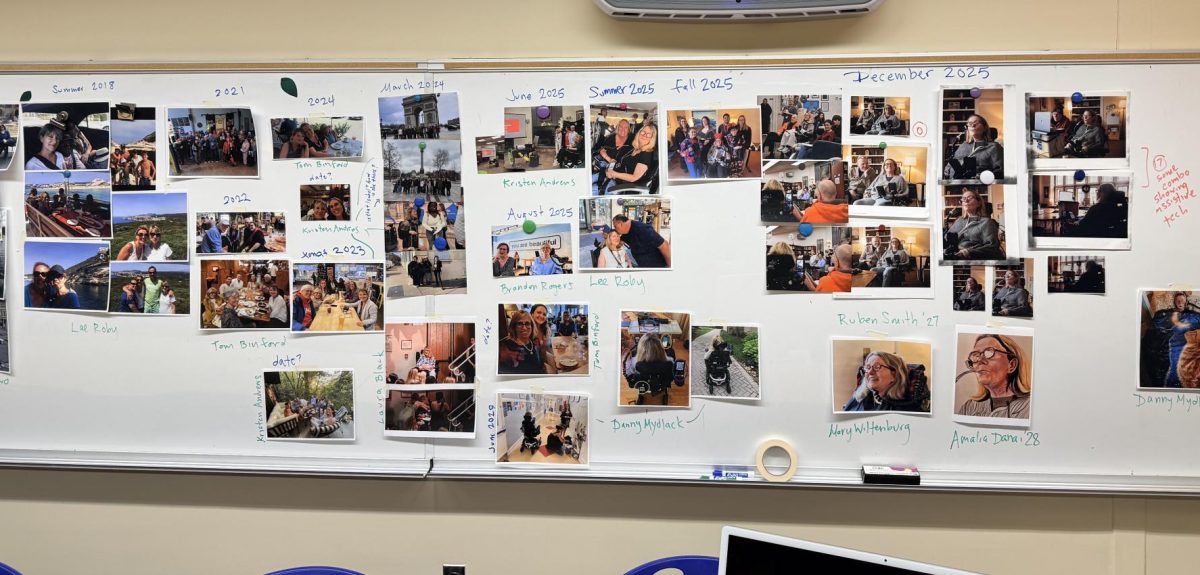
From November 2025 to February 2026, a team of Quaker Quill reporters documented Ms. Koniezhny’s life and career. Three students helmed the project, conducting many interviews – including two substantial ones with Koniezhny herself – and doing the bulk of the writing. A team of 35 more contributed interviews, photos, video, writing, editing, and layout help. In all, reporters conducted 24 interviews with FSB teachers, administrators, and students. Other community members contributed photos and memories by email.
Project Leads: Levi Greene ’27, Charlotte Jacobs ’26, Micah Kramer ’26
Interviewers: Jasmine Bishop ’27, Rebekah Bizimungu ’26, Nicholas Brazhnikov ’26, Lailah Carter ’27, Romy Clark ’28, Neil Cooper ’26, Isaiah Drake ’26, Bartosz Dubiel ’27, Nico Garza ’26, Levi Greene ’27, Elia Gregg ’29, Charlotte Jacobs ’26, Micah Kramer ’26, Graysen Luthye ’28, Oliver Moser ’27, Ryan Nwosu ’27, Noah Ono-Bobi ’26, Sofia Rodriguez ’26, Victoria Sanders ’29, Ren Shere-Wolfe ’26
Writers: Miles Cole ’27, Isaiah Drake ’26, Levi Greene ’27, Kofi Hair-Ralston ’27, Charlotte Jacobs ’26, Sadie Palermo ’26, Micah Kramer ’26
Editors: Miles Cole ’27, Neil Cooper ’27, Lucy Dalton ’30, Will Dalton ’28, Levi Greene ’27, Elia Gregg ’29, Kofi Hair-Ralston ’27, Caleb Kurlantzick ’27, Lucy Langrall ’28, Graysen Luthye ’28, Ruben Smith ’27, Abby Szokoly ’26, Ryan Xu ’26
Photographers: Miles Cole ’28, Levi Greene ’27, Ruben Smith ’27
Painter: Amalia Danai ’28
Video reporter: Micah Kramer ’26
Video producer: Nico Garza ’26
Video editors: Trevor Atkinson ’26, Romy Clark ’28, Lola DePalma ’28, Levi Greene ’27, Lara Hams ’26, Sadie Palermo ’26, Alex Reinecke ’27, Brack Wilner ’26
Web Designer: Levi Greene ’27
Print Designers: Quinn Cornell ’28, Lucy Dalton ’30, Levi Greene ’27, Sadie Palermo ’26, Ren Shere-Wolfe ’27, Ruben Smith ’27
Advisors: Mary Wiltenburg, Amber Wagner Gaines
To learn more:



Wynter Eddington • Apr 9, 2026 at 9:27 am
I’m in awe, such a well written story! This is a very impressive piece of work by the students. Hats off to all who were involved in this special in memoriam honoring the legacy of Christine. I worked at Friends for a few years decades ago and I remember Christine’s quiet spirit. Love and light to her loved ones and friends.
Terry Spencer • Mar 30, 2026 at 12:12 pm
I’m new to teaching after 40 years as a professional journalist, mostly with The Associated Press. Congratulations on such a well-done story — it would be a worthy addition to any publication — the AP, The New York Times, The Atlantic, anywhere. I have shared it with my students so they have something to strive for.
Levi Greene • Apr 1, 2026 at 10:30 am
Thank you so much for your kind words. They mean more than I can express. To hear that from someone with 40 years in the field is truly humbling, especially as someone who hopes to pursue journalism myself in the future.
This project has been, by far, the most meaningful thing that I have worked on. Koniezhny passed away only days after our publication, and I’m so grateful that we were able to share her story while she was still with us.
I hope your students find something useful in it. Congratulations on your transition into teaching, I imagine you have a lot to offer them.
Ned Harris • Mar 7, 2026 at 3:33 am
I was riveted, reading this tribute to a teacher who inspired so many through her dedication to her craft and to her students. The photos and quotations honor her impact and legacy, and speak to the power of teaching and learning in the Friends community. I knew Christine as a valued colleague from a neighboring school.
Jadyn Murvine • Mar 6, 2026 at 11:51 pm
I found this article scrolling through Best of SNO, and wow is it deserving of that distinction. This is such a beautiful tribute to a wonderful person. I may not have any connection to this school, but I feel her importance and this article is so amazingly done. As a high school student editor myself, this article is helping me reimagine what coverage can look like. ALS is a horrible, horrible disease. Not too long ago, my great uncle passed away from it. It’s such a beautiful and inspiring story that she chose to live out her final years with you guys. I feel reminded to not take my life, my body, my abilities for granted. Thank you for this article. It’s truly one of the most moving things I’ve ever read.
Lauren Graziano • Mar 6, 2026 at 8:54 am
This article was incredibly well done. It brought me to tears for a woman I don’t even know. As a teacher and advisor in Maryland, I commend your effort, photography, videography, and beautifully written words for a superior form of journalism that did exactly what it should. It made me feel for a fellow teacher who was so endearingly loved and I can only hope to make that same impact myself. Kudos to your staff and all involved that provided support and a part of this piece. Amazing work that will be published for a longer part of her legacy.
Gray Clemson ('14) • Mar 2, 2026 at 8:25 pm
This was a very well written and moving eulogy. Though I never had her as a teacher, I had a very positive opinion of her. She was always kind and went out of her way to take notice of the people and things around her. I had just thought about her last week while reading about the Haitian Revolutionary Toussaint Louverture. I remembered saying his name in the hall of the junior grade and she heard me and complimented my pronunciation. That has stuck with me since we barely had interacted before. She made an impact far beyond the walls of her French classroom and the school. She will be missed.
Courtney Anderson 2011 • Mar 2, 2026 at 4:36 pm
Thank you so much for taking the time and care to write this wonderful tribute of Ms. Koniezhny. Even though I never had her as a teacher during my time at Friends, this brought tears to my eyes. Holding everyone at Friends in the light.
-Courtney, 2011
Sylvia Eken • Mar 4, 2026 at 6:06 pm
“What is happening, I have no control over. What I do have control over is my attitude and my reaction to illness.” Chapeau! To a wonderful friend and her wisdom. You will be missed, dear Cristine. Thank you all for a beautiful tribute.